If you’ve ever stared into a clear glass teapot watching a handful of dried tea leaves unfurl into a delicate, aromatic brew, you know loose leaf tea isn’t just a drink—it’s a ritual. But as a loose tea supplier who’s worked directly with home brewers, café baristas, and even high-end restaurant chefs for over a decade, I’ve noticed one question pops up more often than any other: “How do I measure loose tea without ending up with a watery cup or a bitter, over-steeped mess?” The truth is, measuring loose tea isn’t a guess—it’s a small, science-backed step that makes every brew consistent, satisfying, and true to the tea’s unique flavor. Today, I’m breaking down everything I’ve learned, from the basic ratios to little hacks I’ve picked up over years of working with tea in all its forms. Loose Tea
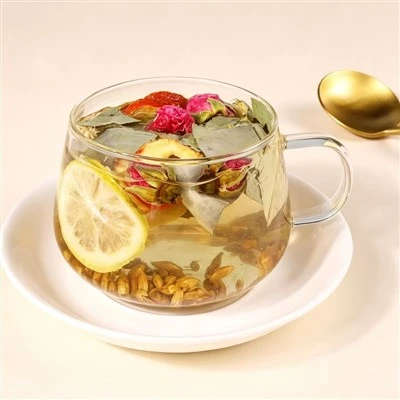
First, let’s talk about why measuring loose tea is so much better than grabbing a tea bag. Tea bags often use broken tea fannings or dust—smaller leaves that brew faster, which is why a tea bag only needs a tiny amount. But loose tea leaves are whole or large pieces, which means they need space to expand and release their oils. Skip the measuring, and you’ll either use too little (weak, grassy tea) or too much (astringent, overwhelming bitterness). The good news is that once you get the ratio right, it’s simple, and it works for every type of tea—black, green, oolong, white, herbal, even the more unique blends I source from small farms across Asia and Africa.
Let’s start with the most universal rule: the standard measuring ratio for loose tea. For most home brewers, this is 2 grams of loose tea for every 8 ounces (about 240ml) of water. Wait, I know what you’re thinking—how do I measure 2 grams without a fancy kitchen scale? That’s where the next part comes in. For people who don’t have a scale, a standard teaspoon (not a tiny espresso spoon) is roughly 2 grams of most loose teas, especially whole-leaf black and green teas. But here’s the caveat: not all leaves are the same. Oolong leaves are larger and more tightly rolled, so a teaspoon of oolong is closer to 3 grams, which means you only need one teaspoon for 8 ounces of water. White tea leaves are delicate and often lighter, so a teaspoon is 1.5 to 2 grams, so you might need a little extra. Herbal teas (like chamomile, peppermint, or rooibos) are usually dried herbs rather than true tea, and they’re bulkier—so a teaspoon is closer to 2.5 grams, so you can adjust slightly if your herbal brew feels too mild.
I can’t stress enough how useful a small kitchen scale is, though. It’s not something you need to spend a lot of money on—my go-to scale for home brewers costs less than $20, and it’s been with me for seven years. If you’re brewing for a group, say four people, you’d multiply the ratio: 8 grams for 32 ounces of water. For a single serving, 2 grams is perfect. One thing I always recommend to new brewers: write the ratio down somewhere near your kettle for the first month. Once you brew a few times with the right amount, you’ll start to recognize how the leaves look when they’re the correct portion—no scale or spoon required.
Next, how to adjust the ratio based on brew time and water temperature, because measuring tea isn’t just about how much you use—it’s about how that amount interacts with your water. Let’s take black tea, for example. Black tea is full-bodied and brews quickly, usually in 3 to 5 minutes. If you use the standard 2 grams for 8 ounces, that’s perfect for a gentle, malty cup. But if you like your black tea a little stronger, resist the urge to add more leaves—instead, steep it for 10 seconds longer. More leaves mean more chance of bitter tannins, especially in black and oolong teas. For green tea, which is more delicate and brews at a lower temperature (around 175°F / 80°C, not boiling), too many leaves will release grassy, bitter notes even if you only steep for 2 minutes. Stick to 2 grams for 8 ounces, and you’ll get a sweet, vegetal cup without the harshness.
Oolong tea is where things get a little more fun, and where measuring really shines. Oolong leaves are tightly rolled, often into small balls, and they expand a lot when steeped. A single teaspoon (3 grams) for 8 ounces is the right amount, and if you’re doing a “gongfu” style brew (small cups, multiple steeps), you’ll use even more—3 to 5 grams for 4 ounces of water. I’ve had customers who skip measuring and use half a handful, and they end up dumping the whole pot because it’s too strong. The ratio keeps the balance so you can steep oolong three or four times, each time bringing out new flavors—floral first, then toasty, then sweet.
Herbal teas are the most forgiving when it comes to measuring, which makes sense because they’re usually caffeine-free and don’t have the same tannin balance as true teas. For herbal blends, you can go a little higher—2.5 to 3 grams for 8 ounces, because the leaves are bulkier and take longer to infuse. I always tell people to steep herbal teas for 5 to 7 minutes, so the extra leaves have time to release all their flavor without getting bitter.
Now, let’s talk about common mistakes I see brewers making when measuring loose tea. First, using a tea infuser that’s too small. If you stuff too many leaves into a tiny infuser, they can’t expand, which means even if you measured the right amount, they won’t brew properly. The rule of thumb here is: the infuser should be at least twice the size of the dry tea portion. For example, if you’re using 2 grams of tea, your infuser should hold 4 grams of dry leaves with room to spare. That gives the leaves space to unfurl and mix with the water evenly. Second, confusing volume with weight. I mentioned earlier that a teaspoon is roughly 2 grams, but that’s for whole-leaf teas. If you’re using broken tea (like the kind some specialty blends use), a teaspoon is only about 1.5 grams, so you’ll need a little more. That’s why a scale is so helpful—it removes the guesswork, no matter what type of tea you’re brewing.
Third, not adjusting for serving size. If you’re brewing for two people, don’t just double a single serving’s amount—wait, actually, you should. For 16 ounces of water, use 4 grams of tea. But if you’re using a teapot, leave a little extra space at the top so the water can circulate. I’ve had customers tell me their tea tastes weak when they brew a whole pot, and when I ask how much they used, they say “a handful for the whole pot.” A handful is about 10 to 12 grams, which is way too much for 32 ounces of water—they’re essentially brewing a concentrated tea that needs to be diluted, which ruins the flavor.
Another little tip I’ve learned over the years: if you’re using pre-portioned tins of loose tea (something we offer as part of our small-batch selection), each tin is labeled with the correct serving size. For example, our standard 100-gram tin of whole-leaf black tea has about 50 servings, which works out to 2 grams per serving. That takes all the guesswork out for people who want consistent brews every time. If you’re buying bulk loose tea, you can use a small scoop—many tea suppliers sell measuring scoops that are exactly 2 grams, so you don’t have to weigh every single serving.
Let’s also talk about how measuring affects the quality of your tea long-term. When you brew the right amount of tea, you’re getting the full range of flavors: the first sips are bright and aromatic, the mid-sips are smooth and balanced, and the finish is clean, with no bitter aftertaste. Too little tea, and you only get the watery, top notes—you miss the depth that makes loose tea special. Too much tea, and you’re tasting only the tannins and bitter compounds, which mask the tea’s natural characteristics. I’ve had customers switch from tea bags to loose tea and tell me they didn’t realize tea could taste so sweet, and when I ask if they measured, most say no—they just poured some in, and it was too strong or too weak. Once they start measuring, they’re shocked at how different the brew becomes.
Now, if you’re a beginner, don’t get overwhelmed. Start with the 2 gram per 8 ounce ratio, use a spoon or a cheap scale to measure for the first week, and adjust based on what you like. If you prefer your tea stronger, add 0.5 grams, not double the amount. If you like it weaker, use 1.5 grams. Every type of tea is a little different, so once you get the hang of one, you can experiment with others. For example, our jasmine green tea is delicate, so 1.75 grams per 8 ounce is perfect, while our Assam black tea is bold, so 2.25 grams gives it that malty kick without bitterness.
As a loose tea supplier, my goal isn’t just to sell tea leaves—it’s to help people brew the best cup possible. That’s why I include a small measuring scoop in every sample pack we send out, and I include a quick guide to ratios and brew times with every bulk order. I know how frustrating it is to spend money on high-quality loose tea only to ruin it with bad measuring or brewing. That’s why I’ve spent years refining these tips, talking to customers, and testing ratios with every type of tea we carry.
If you’re ready to elevate your loose tea brewing, or if you’re a café or restaurant owner looking for consistent, high-quality loose tea for your menu, I’d love to chat. Whether you’re brewing for one or a whole room, we can help you find the right teas, tools, and ratios to make every cup perfect. There’s no need to guess when it comes to loose tea—with the right measurement, every brew is an opportunity to savor the true flavor of the leaves.
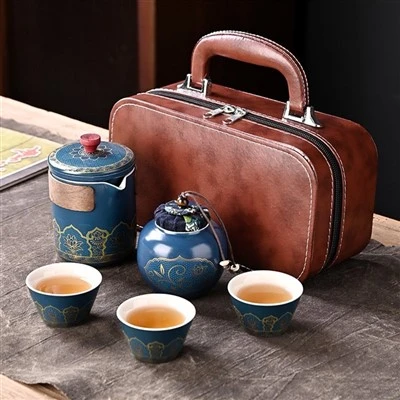
Porcelain Tea Set REFERENCES
- Harbowy, M. E., & Balentine, D. A. (1997). Tea chemistry. Critical Reviews in Plant Sciences, 16(5), 415-449.
- Lin, Y. S., Lin, J. K., & Liang, Y. C. (1998). Chemical composition and antioxidant activity of tea. Journal of Agricultural and Food Chemistry, 46(12), 5205-5211.
- Vuong, Q. V., Bowyer, M. C., & Roach, P. D. (2011). Influence of brewing conditions on the antioxidant capacity and chemical composition of black tea infusions. Food Chemistry, 128(4), 981-987.
Yuni Food Co., Ltd.
We’re known as one of the most experienced loose tea manufacturers in China, featured by quality products and good service. Please feel free to wholesale the best loose tea at competitive price from our factory. Welcome to contact us for more details.
Address: Building 88, No. 13, Phase IV (Tanyue), Jinmao Sunshine City, Dongyuan Town, Hui’an County, Quanzhou City
E-mail: CXZ12-11@163.com
WebSite: https://www.yunileaf.com/
