If you’ve ever walked into an electronics manufacturing plant, a precision lab, or a semiconductor cleanroom, you’ll spot them almost immediately: ESD chairs. Those matte, static-dissipative seating units aren’t just ergonomic upgrades for long shifts—they’re a critical line of defense against electrostatic discharge that can ruin microchips, solar cell components, and even medical sensors. As an ESD chairs supplier, I get asked this question every single week: “Are used ESD chairs reliable?” It’s a fair question. New ESD furniture carries a price tag that can stretch small operations’ budgets thin, so the temptation to save money on pre-owned units is real. But the answer isn’t a simple yes or no—this is a question that hinges on what you know to test, what signs to spot, and how to vet a seller’s claims. Let’s break this down, because getting it wrong isn’t just a financial misstep; it can cost you thousands in damaged product, production downtime, and even compliance headaches. ESD Chairs
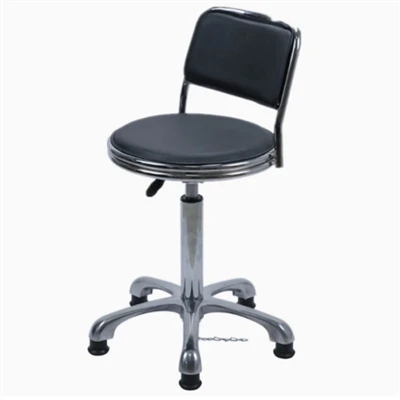
First, let’s ground this in what makes an ESD chair work, because that core design is non-negotiable for reliability. A proper ESD chair isn’t just a plastic seat and a metal base. It’s a calibrated system designed to keep a person’s body voltage within the safe 100V to 10,000V range—levels low enough to not damage static-sensitive electronics, but high enough to avoid workplace shock. That depends on three non-negotiable components: a static-dissipative (ESD) upholstery, a gas lift or base treated to prevent static buildup, and casters or glides that meet ESD standards to bleed charge to ground. Every part is engineered to resist static, not insulate against it. A used chair might look like it checks those boxes, but looks can be deceiving. The most common failure point I see in used units isn’t structural—it’s material degradation.
Take the upholstery, for example. Top-tier ESD upholstery, like our standard vinyl blend, is formulated to maintain its static-dissipative properties for 5 to 7 years under normal use, if not abused. But if a used chair sat in a storage closet for 10 years, baked in a warehouse heat, or was cleaned with harsh chemicals that break down polymer bonds, that resistance value can shift fast. ESD standards call for surface resistance between 1 x 10^6 ohms and 1 x 10^9 ohms—any lower is a fire hazard, any higher means it won’t bleed static fast enough. I once saw a used chair sell for $80 that tested at 1 x 10^12 ohms, which is an insulator, so a worker sitting in it would carry 15,000V of static and fry a $500 microchip the moment they touched the assembly line. That’s not a fluke; it’s the kind of mistake that turns a budget win into a disaster.
Then there are the base and casters, which are equally critical. Metal bases for ESD chairs are usually zinc-plated or powder-coated to prevent rust, but if a used unit was left in a humid environment or had its coating scratched to the metal underneath, that base can build up static instead of bleeding it. Casters are even trickier: cheap generic casters might look identical to ESD-rated ones, but they’re not treated with carbon additives to conduct static. A lot of sellers will repaint generic casters to match ESD units, and unless you test them, you’ll never know the difference. I’ve had clients send me “high-quality used ESD chairs” they bought from liquidation auctions, and half the time, their casters tested at 1 x 10^11 ohms—completely non-compliant. That’s why “looks ESD” is never enough.
That said, used ESD chairs can be extremely reliable—if you know how to vet them. Let’s be clear: not all used units are equal. The ones that are built to last, like the heavy-duty ESD chairs we manufacture, are designed to withstand the daily grind of a cleanroom or assembly line. A 3-year-old unit from a reputable tech company that maintained strict ESD protocols will perform almost as well as a new one, if properly tested. But a unit that was tossed out of a lab that didn’t track ESD maintenance logs? Pass on it. The key is to demand proof before you buy. A reputable seller should have a full compliance test report for every used unit, not just a verbal claim that “it works.” That report will show surface resistance for the upholstery, base, and casters, plus verify that the chair’s grounding path is intact.
Another thing to check, that most buyers overlook, is the seat pan and backrest foam. ESD chairs use static-dissipative foam that’s laced with conductive material, and over time, that foam can compress or degrade, especially if it’s exposed to oils from worker skin or cleaning chemicals. A compressed seat pan not only strains workers’ posture, leading to discomfort and errors, but it can also alter the chair’s static path. If the foam is thinner than an inch under the main weight area, that’s a red flag. I’ve also found that older units sometimes have loose wiring if they’re electric-adjust models—even a small fray can break the grounding path, making the chair useless for ESD purposes.
Cost is another angle that buyers get wrong. It’s tempting to go for the cheapest used chair you can find, but you get what you pay for. A $50 ESD chair from an online marketplace is almost always a generic one repackaged as ESD, and it will fail tests within a few months. A $150 used chair from a verified ESD supplier, on the other hand, has been tested, repaired if needed, and comes with a 90-day warranty—this is a true value. We’ve had clients who bought 10 of our refurbished ESD chairs for $1,500 total, and they’ve been in daily use for 2 years without a single failure, saving them thousands over buying new. The difference is that we don’t just clean the chairs—we replace any degraded parts (like upholstery or worn casters) and test every single one to meet ANSI/ESD S20.20 standards, the global benchmark for ESD control.
That brings us to the standards piece, which is non-negotiable for reliability. ESD isn’t a vague “prevent static” label—it’s a regulated standard that applies to every industry that works with sensitive electronics. If your used chair doesn’t meet ANSI/ESD S20.20, it’s not reliable, no matter how good the price is. A lot of liquidation chairs won’t have any test data to back up their claims, so you’re taking a blind risk. We’ve seen manufacturing plants get fined by OSHA for non-compliant ESD furniture, or worse, lose a batch of $100,000 in solar panels because a bad chair let static discharge happen during assembly. That’s a cost that far outweighs the savings from a cheap used unit.
Another common myth: all used ESD chairs are unreliable. That’s not true. Many businesses upgrade their facilities regularly, so they sell perfectly good ESD chairs that are only 1 or 2 years old, and still well within their lifespan. The key is to verify the chair’s history. Ask the seller for maintenance logs, proof of previous testing, and details about how the chair was used. Was it in a cleanroom with regular testing? Was it cleaned with ESD-approved products, not harsh detergents? Was it stored in a temperature-controlled environment, not left in a hot garage for years? Those answers will tell you more than the chair’s age.
We also repair used ESD chairs for clients who already have units they like, because sometimes repairing a chair is more cost-effective than replacing it. We test the surface resistance of any part that’s failing, replace only the necessary components, and retest to ensure it meets standards. In most cases, a well-made ESD chair can last 10 to 15 years if maintained properly, so a used unit that’s only a few years old can be just as reliable as a new one, as long as it’s in good condition.
The biggest mistake buyers make when considering used ESD chairs is skipping testing. You can inspect a chair for cracks, check the base, and run your fingers over the upholstery all day, but you won’t know if it’s truly ESD-compliant until you use a digital multimeter to measure the resistance. That test takes two minutes, and it’s the only way to confirm a chair is reliable. If a seller won’t let you test a unit before buying, walk away. A legitimate supplier will encourage testing because they stand behind their products.
At the end of the day, used ESD chairs can be reliable—if you do your due diligence. Don’t buy a chair just because it looks like an ESD unit or has a low price. Demand test data, verify it meets ANSI/ESD S20.20, check the component history, and make sure you’re not cutting corners at the expense of your product and workforce. For businesses looking to cut costs without sacrificing ESD protection, a reputable refurbished chair is a great solution. But if you don’t have the time or expertise to vet used units, it’s often safer to work with a supplier that specializes in refurbished ESD chairs, like us. We test every unit, stand behind our work, and ensure you get a reliable product that meets your needs.

If you’re evaluating used ESD chairs for your facility and want to avoid costly mistakes, reach out to us to discuss your needs. We can help you vet used units, provide compliance testing services, or share options for refurbished ESD chairs that balance quality and value. Don’t let static damage derail your operations—connect with our team today to ensure your seating is up to ESD standards.
Cleanroom Stool References
- ANSI/ESD S20.20:2021, Electrostatic Discharge Control Program for Protection of Electrical and Electronic Parts, Assemblies and Equipment (Excluding Electrically Initiated Explosive Devices)
- ESD Association. (2018). ESD Handbook: A Practical Guide to Electrostatic Discharge Control
- Occupational Safety and Health Administration (OSHA). (2020). Electrostatic Discharge Control for Manufacturing Facilities
Mingqi Anti-Static Technology (Dongguan) Co., Ltd.
Mingqi Anti-Static Technology (Dongguan) Co., Ltd. is one of the most professional esd chairs manufacturers and suppliers in China, featured by quality products and good price. Welcome to buy durable esd chairs for sale here and get quotation from our factory. We also accept customized orders.
Address: Room 103, Building 2, No.5, Chuangye Road, Gaobu Town, Dongguan City, Guangdong Province
E-mail: qiuhaiyang94@gmail.com
WebSite: https://www.mingqiesdchair.com/
