If you’re working in process industries—think chemical plants, food and beverage manufacturing, or wastewater treatment—you’ve probably run into radar level meters (RLMs) before. Maybe you’re troubleshooting a faulty one in a tank farm, or your team is upgrading old level sensors to get more accurate data for inventory or safety compliance. One of the most common questions I get from customers, whether they’re first-timers or seasoned engineers, is: What frequency do these things use anyway? And does it actually matter for my application? Radar Level Meter
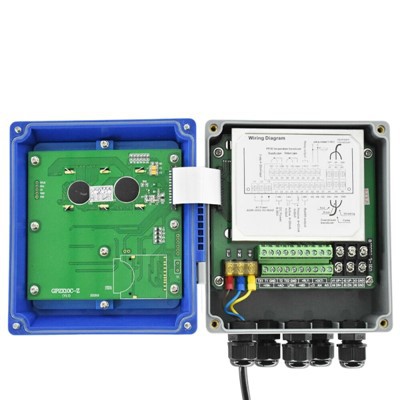
As a supplier of radar level meters, I don’t just sell products—I help folks pick the right tool for their specific job. So let’s break this down simply, no overly dense equations or industry jargon that makes your eyes glaze over. First, let’s start with why frequency even matters here. Radar works on the same basic principle as a sonar: it sends out an electromagnetic pulse, bounces it off the surface of whatever you’re measuring (liquid, solid, slurry, even dense fog), and calculates distance based on how long the pulse takes to come back. Frequency is how many of these pulses (or waves) travel per second, and that’s the key that determines how the meter performs.
The two main frequency bands you’ll see for industrial radar level meters are 24 GHz and 80 GHz. Wait, are there others? Yeah, older models used 5.8 GHz, but those are mostly phased out now for most modern applications. Let’s go through each one, and what you should know when you’re picking.
First up: 24 GHz radar. This is the workhorse for a lot of everyday use cases, right? It’s been around for decades, tested and true, which is why you’ll still find it on lots of tank farms and small to mid-sized processing units. So what’s the deal with 24 GHz? Lower frequency means longer wavelength—roughly 12.5 millimeters, to be exact. That longer wavelength has some pros and cons. Pros first: it’s cheaper to manufacture, so 24 GHz meters tend to be more budget-friendly upfront. They’re also more forgiving when it comes to certain types of process noise, like foam on a liquid surface or dust above a solid material. Wait, foam is a big one—if you’re measuring a tank with foamy product (like beer, or a chemical solution that gets frothy when mixed), a 24 GHz wave can penetrate a thin layer of foam pretty easily, so you don’t get false readings from the foam surface bouncing back the pulse instead of the actual liquid. That’s a huge win for a lot of food and beverage customers I work with.
But the cons of 24 GHz are worth noting, too. Because the wavelength is longer, the beam width (the “cone” of the radar wave that spreads out from the antenna) is wider. For 24 GHz, that beam width is around 8 degrees. What does that mean in real terms? If you have a small tank—say, less than 10 feet in diameter—or you’re measuring a very small area, that wide beam might bounce off the tank walls, pipes, or other internal components instead of the product surface. You’ll get ghost readings, or errors, which no one wants. Also, if you’re measuring a very distant level—like a tank that’s 50 feet tall or more— the wide beam can spread out too much, so the pulse is weaker when it hits the surface and bounces back, leading to less accuracy.
Now, the newer kid on the block: 80 GHz radar. This is the high-frequency option that’s been blowing up in the last 10 years or so, and for good reason. Higher frequency means shorter wavelength—just 3.75 millimeters, way smaller than 24 GHz. That shorter wavelength translates to a much narrower beam width, around 3 degrees. That’s a game-changer for precision. Let’s break down the pros here: first, the narrow beam means it’s way less likely to bounce off tank walls or internal obstructions. Perfect for small tanks, or tanks with lots of internals (like agitators, heating coils, or inlet pipes) that would mess up a 24 GHz signal. It also has way better accuracy, usually within a millimeter or two, which is critical for applications like high-value inventory tracking—think pharmaceutical ingredients, or expensive specialty chemicals where even a tiny measurement error can cost thousands of dollars in product.
Another big pro for 80 GHz? Higher frequency means the pulse is stronger when it travels longer distances. For tanks that are 100 feet tall or more, you get a much more reliable return signal, so less chance of missing the surface or getting a delayed reading. What about the cons, though? Nothing’s perfect. 80 GHz meters are more expensive than 24 GHz ones, both upfront and sometimes for calibration too. Also, that shorter wavelength is less forgiving when it comes to thick, dense foam or heavy dust. If the foam layer is more than a couple inches thick, the 80 GHz wave might reflect off the top of the foam instead of penetrating through to the actual liquid. Same with very fine, powdery solids that kick up a lot of dust above the material—80 GHz waves can get scattered by that dust, leading to bad readings. I’ve had customers come to me panicking because their 80 GHz meter was giving wonky data, and 9 times out of 10 it turned out they were measuring a thick, foamy product that needed a 24 GHz unit instead.
Wait, let’s go back to that old 5.8 GHz radar I mentioned earlier. You’ll almost never see these in new installations now, but some older facilities still use them. They’re even lower frequency than 24 GHz, so longer wavelength, wider beam, cheaper to make but way less accurate. They’re mostly only good for very basic, low-stakes applications where you just need a rough level reading, not precision. If you’re upgrading your sensors, I’d skip 5.8 GHz entirely—you’ll get much better performance for a tiny bit more money with 24 or 80 GHz.
Now, how do you pick the right frequency for your needs? Let’s run through a quick checklist I use with every customer who calls me:
-
What’s the size of your tank, and is there internal obstructions? If your tank is under 15 feet in diameter, or has a lot of pipes, agitators, or coils, 80 GHz is probably the way to go. The narrow beam won’t bounce off the walls. If it’s a big, open tank with almost no internals, 24 GHz is fine, and cheaper.
-
What are you measuring, and what’s above it? Liquid with thin vs thick foam? Solid with little vs a lot of dust? If you’ve got thick foam or heavy dust, 24 GHz is more reliable—its longer wavelength cuts through that gunk way better than 80 GHz. If it’s a clean surface with no obstructions, 80 GHz gives way better accuracy.
-
How accurate do you need to be? If you’re just tracking level for general process control, ±1 inch accuracy is enough—24 GHz works. If you’re tracking inventory for billing, or need ±1 millimeter accuracy for regulatory compliance (like food safety or environmental reporting), 80 GHz is non-negotiable.
I’ve seen so many people get this wrong. A couple months back, a customer from a mid-sized brewery reached out, complaining that their new 80 GHz radar meter was giving weird readings every time they brewed a batch of stout, which gets super foamy. Turned out they’d bought the high-frequency unit because they thought it was “better” for all uses, not realizing their foamy product needed the 24 GHz model. We swapped it out, and their readings went back to being spot on. That’s the kind of mistake I help customers avoid every day—no one wants to waste money on the wrong meter, or have downtime because of bad measurements.
Wait, also—are there other frequency bands? I’ve heard some folks talk about 120 GHz, but that’s even newer, super niche, mostly for ultra-precision applications in labs or very small tanks. You won’t find those in most industrial settings yet, so we can safely ignore them for 99% of what our customers deal with.
Another thing to keep in mind: frequency isn’t the only factor that affects performance, right? The antenna type matters too, the power of the pulse, the software in the meter that processes the signal. But frequency is the foundation, so picking the right one is the first step to a working, reliable level meter.
Let’s talk about some real-world examples to make this concrete. A wastewater treatment plant I work with uses 24 GHz radar for their large sludge tanks. The sludge kicks up a lot of dust and has a thin layer of foam on top, so the 24 GHz wave penetrates that perfectly, and the wide beam doesn’t need to avoid tiny internal pipes since the tanks are big and open. They get consistent readings, and it’s way cheaper than if they’d bought 80 GHz.
On the flip side, a pharmaceutical company I supply uses 80 GHz meters for their small, stainless steel tanks that hold active pharmaceutical ingredients (APIs). The tanks are only 6 feet in diameter, and have lots of small sensors and piping inside. The 80 GHz’s narrow beam never bounces off the walls, and the accuracy is within half a millimeter, which is required for tracking high-value APIs that cost hundreds of dollars per liter. They can’t afford to have even a tiny measurement error, so 80 GHz is worth the extra cost.
What about common myths I hear? A lot of folks think higher frequency is always better. Nope, as the brewery example shows—high frequency is worse for foamy or dusty materials. Another myth: 24 GHz is obsolete. Not at all, it’s still the most popular for general industrial use because of its reliability and lower cost. It’s not going anywhere anytime soon.

So, if you’re in the market for a radar level meter, here’s the takeaway: don’t just grab the highest frequency unit you can find. Think about your tank size, your product’s properties, and how accurate you need your readings to be. If you’re still not sure, that’s what we’re here for. We help customers all the time sort through their needs, pick the right frequency, and get a meter that works for their specific process. Whether you’re upgrading a single sensor in a small tank or outfitting an entire tank farm, we’ve got the experience to guide you. If you’re tired of dealing with faulty level readings, or spent too much money on the wrong meter, reach out—we can walk through your application, answer all your questions, and help you get set up with the right radar level equipment.
Civil Engineering Test References:
- Process Industry Radar Level Measurement Standards, International Society of Automation (ISA)
- Industrial Microwave Sensor Technology Overview, IEEE Transactions on Industrial Electronics
- Level Measurement Best Practices for Process Industries, National Resource Center for Occupational Safety and Health (NIOSH)
- 24 GHz vs. 80 GHz Radar Performance Comparison, Sensor Technology Journal
Dalian Yheng Technology Co., Ltd.
Dalian Yheng Technology Co., Ltd. is one of the leading radar level meter manufacturers and suppliers in China, also supports customized service. We warmly welcome you to buy high quality radar level meter in stock here from our factory. Contact us for more details.
Address: F1605, NO.10 Huoju road, High-tech Industrial Zone, Dalian, China
E-mail: contact@dlyheng.com
WebSite: https://www.yhengphmeter.com/
