Hey there, if you’ve ever spent time in a winery—whether behind the scenes or at a tasting—you’ve probably stumbled on a stack of big, bulbous 1.5L Magnums tucked next to the standard 750ml bottles. They’re fancy, great for long-term wine aging, and honestly? Way more fun to crack open at a dinner party than a tiny regular bottle. But here’s the question I get all the time from winery owners, small-batch producers, and even folks who just bought their first used wine filler machine: Can a regular wine filler handle Magnums? As a wine filler machine supplier who’s been knee-deep in this exact problem (literally, I’ve had more Magnum cork dust on my jeans than I can count), I’m here to break this down like I’m ranting about a wonky filler valve at 2 a.m. on a winery floor. Wine Filler Machine
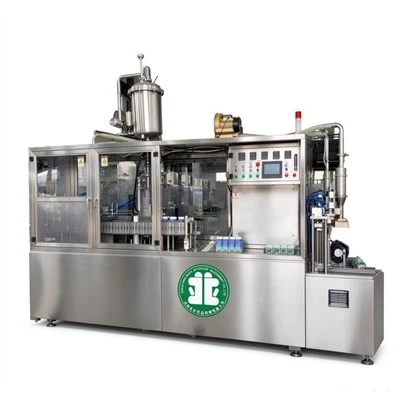
First off, let’s get one thing straight: “regular wine filler” is a broad term. Most small to mid-sized wineries start with a semi-automatic gravity filler, which is workhorse for 750ml bottles, easy to clean, cheap to fix, and fits most winery budgets. Magnums are bigger—twice the volume, to be exact—and their shape isn’t just a scaled-up 750ml. The neck is longer, the base is wider, and if you’re using hand-labeled or custom-wrapped Magnums, there’s less wiggle room for adjustments. So does that mean your gravity filler can’t touch them? Not even close. Let’s talk about the basics first.
Gravity fillers work on a simple principle: the wine in a tank sits at a fixed height, so the flow of wine out of the valve into the bottle is consistent based on how long you leave the valve open. For a 750ml bottle, you set the timer once, and it works for thousands of bottles. For a Magnum? You just need a different timer. Wait— that’s it? Sort of. But here’s the catch: not all fillers have adjustable timers that can account for the faster flow rate when filling a bigger bottle? No, wait— actually, gravity flow is slower when the bottle is bigger? No, let’s get this right. If your filler’s valve is calibrated for 750ml, the volume per second is fixed. So to get 1.5L, you just double the time. But that’s only if your filler can hold a consistent flow rate for longer fills, which some cheap semi-automatics can’t. They start to dribble after a few hundred cycles, and suddenly your Magnums are overfilled by 50ml, which is a mess— wine dripping down the side, cork won’t go in, you’re wasting product and fighting with sticky label glue.
I remember a winery in Oregon that called me last year, panicking because they just got their first order of Magnums for a holiday release. They had a 5-year-old semi-automatic gravity filler that worked great for 750mls, but their first test fill of a Magnum left half the bottle underfilled, and the other half overflowing. I drove out there with a spare valve and a portable timer, and it turned out their filler’s old valve was wearing out— it wouldn’t seal evenly for longer fills. Once we swapped the valve and adjusted the timer, they were cranking out perfect Magnums by lunch. The mistake they made? Thinking the same settings would work, not that the Magnum’s volume just needed a tiny tweak to the filler’s wear parts.
Now, what about automated fillers? The big, high-speed ones used by large production wineries? They’re even easier for Magnums, because they have flow meters that track volume, not time. You just plug in “1500ml” instead of “750ml”, and the machine stops filling when it hits that exact number. No more guessing, no more overflows. But here’s the thing I tell every winery owner: most of the time, the bottleneck isn’t the filler itself, it’s the setup. Wait— that’s true. If your winery’s conveyor belt is set for 750ml bottles, a Magnum is going to sit crooked, so the filler valve won’t line up right. That causes dribbles, uneven fills, and you’ll waste a lot of wine before you figure it out. I had a client in Napa last quarter who was running 1,000 Magnums a day on a automated filler, but their conveyor was only adjusted for 750ml. They had to stop production for two days just to shift the conveyor guides, and they lost a week of shipping. That’s the kind of avoidable headache that makes me want to yell from the rooftops: CHECK YOUR CONVEYOR BEFORE YOU RUN MAGNUMS.
But wait— is there any filler that can’t handle Magnums? The short answer is super old, outdated fillers from the 90s that have fixed timers and no way to adjust volume. I’ve seen a few of those on used equipment markets, and they’re a nightmare for anything other than standard 750ml. If you’re looking at a used filler, ask the supplier: “Can this adjust fill volume independently for different bottle sizes?” If they say no, keep walking. Because you will regret it.
Another big myth: Magnums need a special kind of filler because they need to be filled with less oxygen. Wait— that’s true, but it’s not unique to Magnums. Any bottle, regardless of size, needs to be filled with minimal oxygen to keep the wine from oxidizing, which makes it go bad faster. The trick here is that Magnums hold more wine, so oxidation is less of a risk over time, but when you’re filling them, you still want to avoid that splash that lets air in. So if your filler has a counter-pressure feature, that’s perfect for Magnums. Counter-pressure fillers push an inert gas (usually nitrogen or CO2) into the bottle first, then fill it, which cuts down on splash and oxygen. Now, do all fillers have counter-pressure? No— but if you’re thinking about switching to Magnums regularly, that’s a feature worth looking for. I’ve had small wineries skip counter-pressure for Magnums and been fine, because they sell them all within a year, but if you’re planning to age them for 5+ years, that’s non-negotiable. I had a client in Bordeaux who makes aged cabernet in Magnums, and their filler has had counter-pressure for 10 years— they won’t touch a regular filler without it, because oxidation would ruin their product.
Let’s talk about common mistakes I see new Magnum producers make, because I’ve fixed more of these than I can count. First, using the same corker for 750ml bottles. A Magnum cork is way longer, so if your corker isn’t adjusted to push it in all the way, you’ll get loose corks, which again leads to oxidation. I once had a winery call me at 8 p.m. crying because their first batch of Magnums had corks falling out, and it turned out they used their old corker meant for 750mls. The fix? A $20 corker adjustment kit, and they were back to packing bottles by 10 p.m. Second, not accounting for the extra weight. Magnums are heavy— twice the weight of a 750ml, so your filler’s support arms, conveyor, and even your team lifting them will take a hit. Some cheap semi-automatic fillers aren’t built to hold that extra weight, so they’ll wobble mid-fill. That’s why I always recommend testing a filler with an empty Magnum bottle first, before you buy it. Pick it up, put it on the filler, make sure it’s stable. If it wobbles, move on. Third, forgetting to clean the filler properly between 750ml and Magnum runs. Because Magnums have a bigger opening, wine residue can get stuck in the valve, and if you switch between sizes without cleaning, you’ll get cross-contamination. I had a client who ran a rosé batch in 750mls, then switched to Magnums for a red, and ended up with rosé-red blend that no one wanted. Turned out they didn’t clean the valve between runs. Oops.
Now, let’s get to the part where you might be thinking: So if I have a good filler, why would I even bother with Magnums? Well, they’re more expensive, they age better because the smaller surface area to volume ratio means less interaction with oxygen, and customers will pay way more for a Magnum than 750mls. That’s the whole point. But the takeaway here is: Yes, your wine filler can handle Magnums— if it’s the right kind, and you adjust the small stuff. It’s not a magical upgrade, it’s just adjusting settings and checking the basics. I’ve seen a $5,000 semi-automatic filler crank out perfect Magnums, and a $50,000 automated filler ruin them because the conveyor was off. It’s never the machine, it’s the setup.
Wait, but what about sparklers? Oh right, Magnum sparkling wine is a whole other beast. You can’t fill sparkling Magnums with a regular still wine filler— they need a filler that can handle pressure, because the CO2 in sparkling wine makes it fizz and foam. So if you’re doing sparkling Magnums, you need a pressure filler, not a gravity or automated still filler. That’s the only exception I’ve found. Every other type of wine— red, white, rosé, even fortified wine— can go through your regular filler, as long as you adjust it.
I want to be honest here: If you’re only planning to make 100 Magnums a year, it’s probably not worth buying a whole new filler. You can outsource the filling to a custom co-packer that has the right setup. But if you’re scaling up, or you want to add Magnums as a permanent part of your line, a good semi-automatic or automated filler will handle them no problem. I’ve helped dozens of wineries go from zero Magnums to 5,000 a month without buying a brand new filler, just adjusting what they had.
Now, if you’re reading this and you’re staring at your filler, wondering if it can handle your next Magnum run, don’t guess. Bring an empty Magnum bottle down to your machine, test a fill with water first (way cheaper than wine), check the valve, the timer, the conveyor, and the pressure if you’re making sparkling. If you run into a problem, hit me up— as a wine filler machine supplier, I’ve seen every issue, and I can walk you through it, or send a spare part, no hassle.
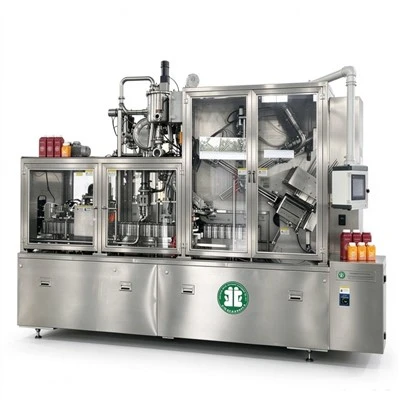
Wait, let’s wrap this up. The short answer to the question “Can a wine filler handle 1.5L bottles (Magnums)?” is: Most of the time, yes— as long as your machine’s in good shape, you adjust the settings, and you account for size-specific basics like conveyor alignment and corker fit. The old myth that Magnums need a whole new filler is exactly that— a myth. I’ve been in this industry long enough to know that the biggest problems aren’t from the machine itself, they’re from skipping the small checks before you switch bottle sizes. If you’re ready to test your filler with Magnums, or you’re looking to upgrade to a machine that’s built to handle all bottle sizes, give us a shout. We don’t do pushy sales, we just do wine filler machines that work, and we’ve got the parts and support to keep you running, even when you’re cranking out Magnums at 3 a.m. for that last-minute holiday order.
Yogurt Filling Machine For further reading:
- Wine Filling Technology: A Practical Guide for Small and Mid-Size Wineries, American Society for Enology and Viticulture, 2021.
- Magnum Bottle Specifications and Processing Considerations, Wine Business Monthly, 2022.
- Oxygen Reduction Practices in Wine Packaging, International Wine Growers Association, 2020.
Shenyang Beiya Beverage Machinery Co., Ltd.
With abundant experience, we are one of the most professional wine filler machine manufacturers and suppliers in China. If you’re going to buy customized wine filler machine made in China, welcome to get quotation from our factory. For price consultation, contact us.
Address: No.2-1, Tongling Street, Yuhong District, Shenyang City, Liaoning Province, China
E-mail: market@sybeiya.com
WebSite: https://www.chinafilling.com/
