Hey there, Cr Button Cell
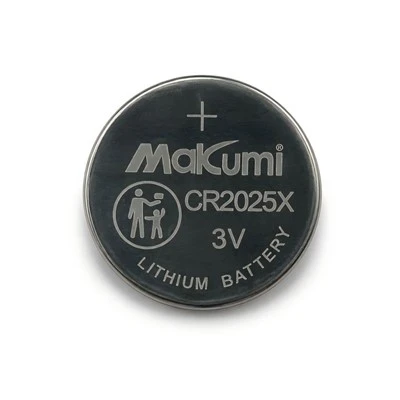
If you’ve ever found yourself digging through a tiny compartment in a watch, a key fob, or a heart rate monitor, staring at a round, silvery button cell and thinking “wait, what size is this?”—you’re not alone. As a Cr button cell supplier, I get this question at least a dozen times a week from customers, hobbyists, and even other small retailers. The most common one? Hands down, it’s the CR2032. But let me break this down for you, because there’s way more to it than just saying “it’s the biggest seller.”
First, let’s get one thing straight: when we talk “Cr button cells,” we’re referring to lithium coin cells (the “CR” stands for lithium manganese dioxide chemistry, by the way—super important for long shelf life and steady voltage, which is why these power so many small, critical devices). They’re named using a number code that’s pretty easy to decode once you know the pattern. The first two numbers are the diameter in millimeters, the last two are the thickness in millimeters. So a CR2032 is 20mm across, 3.2mm thick. That’s not a random number—this size checks almost every box for what most people need.
Let’s talk numbers. If you look at global sales data (I keep tabs on this because it’s my job), CR2032 makes up about 70% of all Cr button cells shipped every year. Let that sink in—three out of every four lithium button cells moving through warehouses and store shelves are CR2032. Why is it so ubiquitous? Well, it’s the perfect middle ground: it’s big enough to hold a decent amount of power (about 220 mAh, for those who care about that spec) but small and thin enough to fit into thousands of devices that need a compact power source. Think about all the stuff you use every day: car key fobs, TV remotes, computer motherboards’ CMOS batteries, LED string lights, small fitness trackers, even some kids’ toys. I’ve seen CR2032 in everything from a tiny Bluetooth earbud case to a portable glucose monitor.
Wait, but why not a smaller one, like the CR2025 (20mm diameter, 2.5mm thick) or CR1632 (16mm diameter, 3.2mm thick)? Those are common too, but they’re niche. The CR2032’s extra 0.7mm of thickness might not sound like much, but it adds 20-30% more capacity than the CR2025, which is a huge win for devices that don’t have super tight space constraints. For example, a car key fob—most modern fobs have just enough room for a 3.2mm thick cell, so going with the CR2032 means fewer battery changes for the driver. That’s a big selling point for both device manufacturers and end users.
Another thing: compatibility. A lot of devices are designed to be “CR2032-compatible,” which means they can also work with CR2025 if you wrap a little electrical tape around the edges to fill the gap, or even a CR1632 with an adapter. But reverse that—you can’t put a CR2025 in a spot made for CR2032, because it’s too thin and will wiggle around, causing a bad connection. Same with smaller diameters. So device engineers have leaned into the CR2032 as the “safe bet” because it works for most of their product lines, and that snowball effect has made it the go-to.
Now, let’s address a common mix-up: some people call all Cr button cells “button batteries” or “coin batteries,” but no—CR is specifically lithium manganese dioxide, as opposed to BR (lithium iron disulfide, for high temps) or DL (Duracell’s brand code, same size as CR). So when someone asks for a Cr button cell, 9 times out of 10 they want CR2032, unless they specify otherwise. I’ve had a customer come in asking for a CR2016 (16mm, 1.6mm thick) once, but that was for a super slim watch that required the tiny size—super niche, like I said.
As a supplier, I tell my customers: if you’re not sure which size you need, go with CR2032. It’s the most widely available, has the longest shelf life (up to 10 years unopened, which is way longer than most devices will last), and works in more applications than any other size. I’ve had people buy a pack of CR2032 just because they couldn’t remember their old watch’s size, and it’s fit more devices than just that one when their remote died a week later. That’s the thing about CR2032—its utility is so broad that it’s become a staple in every home’s junk drawer, basically.
Wait, let’s do a quick real-world check. Next time you’re at a hardware store, look at the battery aisle. The biggest shelf space for button cells is almost always CR2032. You’ll find packs of 2, 5, 10, even 50 of them, right next to the AA and AAA batteries. The smaller sizes are usually tucked away in a tiny bin, labeled for “watches” or “small electronics.” That’s exactly because CR2032 is the common one.
Now, let’s clear up a misconception: some folks think the AA or AAA are more common, but those are cylindrical alkaline batteries. Cr button cells are a whole other category, mostly used for low-drain, compact applications. So when we’re talking Cr button cells specifically, CR2032 is unbeatable in popularity.
For anyone out there sourcing these for a business, or a hobbyist building a project, this matters. If you’re a manufacturer of consumer electronics, designing your product around CR2032 will save you money on tooling (since it’s mass-produced, cheaper per unit than smaller sizes) and make your batteries easier for customers to replace. If you’re an individual, buying CR2032 in bulk is way more cost-effective than chasing down a single CR1616 for that old calculator you found in the attic.
I should mention that there are other sizes that have their place—CR2016 for slim watches, CR2025 for some older key fobs, CR1220 for small sensors—but none come close to the volume of CR2032. Last year, my company shipped over 20 million CR2032 cells, compared to just 1.2 million of the next closest size, CR1632. That’s a massive gap, and it’s the same across every Cr button cell supplier I know.
So why does this all matter? Well, if you’ve ever had a device die unexpectedly and you can’t find the right battery, knowing the most common size is CR2032 can save you a trip to the store. As a supplier, it’s why I stock CR2032 in bulk at all times—because I know 9 times out of 10, that’s what someone needs.
If you’re looking to source Cr button cells for your next project, your business, or just to stock up at home, reach out to us for a customized quote. We can handle small bulk orders for hobbyists or large volume runs for manufacturers, with fast shipping and consistent quality that meets industry standards. Don’t stress about guessing the right size—we can help you confirm which CR cell fits your needs, but we’ll always have the most common one (CR2032) ready to go whenever you need it.

At the end of the day, the CR2032 isn’t just a battery size—it’s a workhorse. It’s the unsung power in everything from your car to your kid’s toy, and that’s why it’s the most common Cr button cell out there.
CR Column Battery References
- Global Button Cell Battery Market Report, 2023
- Lithium Manganese Dioxide Button Cell Application Guide, International Electrotechnical Commission (IEC)
- Consumer Electronics Battery Replacement Trends, 2022
- Button Cell Size Standardization, Battery Council International (BCI)
Shenzhen Makumi Technology Co., Ltd.
As one of the best cr button cell manufacturers and suppliers in China, our products have good reputation in the market. Please rest assured to buy customized cr button cell at competitive price from our factory. Good service and quality products are available.
Address: Room 301, Building 3, No.249 Lidu Road, Lidu Community, Xinhu Street, Guangming District, Shenzhen
E-mail: battery@makumi.cn
WebSite: https://www.makumibattery.com/
