If you’ve ever walked past a plastic extrusion line, you’ve likely seen it: a machine the size of a small suitcase bolted between the extruder barrel and the die, often overlooked because it sits behind a shroud of piping and wiring. As a plastic auxiliary equipment supplier, I get it—most of our customers come to us focused on extruder output, melt temperature, or die pressure, and plastic screen changers feel like a afterthought until their line shuts down unexpectedly. I’ve spent the last 12 years selling, installing, and troubleshooting these units for compounders, pipe manufacturers, and film producers across North America, and let me tell you: skip investing in a quality screen changer, and you’re not just missing a productivity upgrade—you’re leaving 10% to 15% of your line’s annual output on the table, plus risking thousands in material waste and downtime. Plastic Auxiliary Equipment

Let’s start with the basics, because explaining what a screen changer does without context means missing its most critical function. Plastic extrusion works by melting raw polymer resin (think polyethylene, polypropylene, PET) in a heated extruder barrel, then forcing that molten melt through a shaped die to make everything from pvc pipe to food wrap. The resin you buy from resin suppliers isn’t 100% pure. Even virgin resin has tiny, undissolved polymer gels, fine metal shavings leftover from resin manufacturing equipment, and micro-sized wood or paper particulates from transport bags and bulk containers. Add in regrind or recycled plastic, which more and more manufacturers are using to cut costs, and you’ve got a melt that’s full of debris that would ruin the final product. That’s where the plastic screen changer comes in. At its core, it’s a filtration system for molten plastic, designed to strain out contaminants before the melt hits the die.
But here’s what many new operators don’t realize: it’s not just straining debris. It’s also maintaining consistent line pressure and output. If you’ve ever run an extrusion line, you know die pressure is make-or-break. Too low, and the final product has inconsistent wall thickness, sag, or uneven surface finish; too high, and you risk die damage, extruder motor overloading, or even a melt fracture that ruins a full batch. When contaminants get stuck in your screen, they build a filter cake that gradually restricts melt flow, causing die pressure to spike. A screen changer lets you replace that contaminated screen without shutting down the entire line—a game-changer compared to older, less advanced systems that required full line shutdowns and cool-downs to swap screens. I had a customer making LDPE food wrap last year who was using a manual screen changer and shutting down every two hours to change screens. Each shutdown took 20 minutes to cool, replace, and reheat, costing them $1,200 an hour in lost output and material. We switched them to a hydraulic continuous screen changer, and their downtime for screen changes dropped to 90 seconds per shift. That’s not a small win—that’s an extra 1,500 pounds of good wrap per week for their line.
Let’s break down the different types of screen changers, because each serves a slightly different function, and picking the wrong one is another quick way to bleed profit. First, the old manual slide plate changers: these are cheap, simple, and work fine for small, low-output lines that use only virgin resin with minimal contamination. But their function is limited—you have to shut down the line, sometimes lower extruder temperature, and carefully slide a clean screen into place. I only recommend these for lab lines or small production runs where output isn’t a priority. Then there’s the hydraulic shuttle screen changer, the most common mid-range model. It has two (or more) screen carriers mounted on a hydraulic plate that shifts one clean screen into place while the other is full of debris. The function here is no shutdown screen changes—you can keep the line running at full output the entire time. These work great for pipe, profile, and sheet lines that run consistent resins. The third type, and the one we sell the most of for high-output compounding and film lines, is the continuous screen changer, sometimes called a continuous mesh belt screen changer. Its function is even more seamless: instead of two static screens, it uses an endless belt of woven metal mesh that slowly feeds through the melt stream, automatically discarding contaminated mesh on the opposite side of the unit. This is for lines that process heavily contaminated recycled plastic or high-fill compounds (like PVC with calcium carbonate filler) where screen clogging happens every few minutes. We installed one for a post-consumer PET recycler last year, and they went from changing screens every 45 minutes with a shuttle changer to running 12-hour shifts without a screen change. Their recycled PET flake output jumped 18% in the first three months.
Now, let’s talk about the less obvious, but equally important, functions of a screen changer that most suppliers won’t tell you. First, it protects downstream equipment. After the screen changer comes things like gear pumps, melt filters, and the die itself. A large metal shard from resin or a gel clump that slips past a poorly sized screen can scratch a gear pump rotor, gouge the die lip, or even jam the melt distributor inside the die. Replacing a gear pump costs $15,000, and reworking a custom die lip for a pipe line is another $8,000—costs that are almost always avoidable with a properly sized and maintained screen changer. Second, a good screen changer reduces material waste. When screen clogging causes die pressure to spike, operators often have to reduce line speed to bring pressure back down. That slower speed means more material being fed through the line, but more of it gets rejected for defects like uneven thickness, gels, or surface blemishes. We did a case study for a polypropylene chair profile manufacturer a few months ago: they were using a 60-micron screen and getting 8% scrap. We helped them size a 40-micron hydraulic shuttle screen changer matched to their line’s output, and their scrap dropped to 3.2%. That saved them over $22,000 a year in rework and rejected profiles. Third, it improves product consistency. For industries like medical plastic parts or food packaging, even a single micro-contaminant is a non-negotiable quality failure. A screen changer lets you choose a mesh size specific to your product: 20 microns for medical components, 80 microns for heavy-duty pipe, 100 microns for thin film. It ensures that every pass of melt through the die has the same level of filtration, so your product’s thickness, clarity, and strength are consistent from the first roll of the day to the last.
I can’t tell you how many times I’ve heard a customer say, “I’ll just add an extra screen at the die.” That works for a day, maybe two, but without a screen changer to change it regularly, you’ll end up with a dead zone between the extruder and the die where debris builds up, causing even more contamination and pressure fluctuations. A screen changer isn’t just a filtration tool—it’s a control tool. It lets you manage melt quality, line speed, and pressure without disrupting production, which is the single biggest driver of profitability in plastic extrusion. For auxiliary equipment, the ROI on a quality screen changer is almost always within 12 months, even for small lines.
Now, a few practical notes from 12 years in the field, because there’s a right way and a wrong way to use these units. First, size the screen for your specific resin and application. A 60-micron screen for virgin LDPE is way different than a 200-micron screen for regrind ABS. Second, maintain your mesh regularly—don’t wait for the pressure alarm to trigger before changing screens. Most modern screen changers come with pressure sensors that alert you when the screen is 70% clogged, giving you time to schedule a change during a scheduled line pause, not an emergency shutdown. Third, don’t skimp on maintenance for the hydraulic system or the sealing rings. I’ve seen more screen changer failures from neglected seals than from bad screens; a leaking seal can let unfiltered melt bypass the screen, ruining a full batch of product.
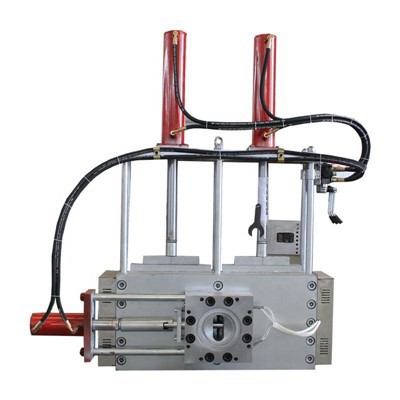
At the end of the day, plastic extrusion is a business of small, continuous improvements, and the screen changer is one of the highest-impact auxiliary tools you can invest in. It’s not the flashiest part of the line, but it’s the one that keeps your line running at full speed, keeps your product consistent, and saves you from costly downtime and waste. If you’re looking to upgrade your current screen changer, or if you’re outfitting a new extrusion line and want to make sure you pick the right unit for your application, our team works with manufacturers of all sizes to design screen changing systems tailored to their specific resins, outputs, and product requirements. We don’t do one-size-fits-all, because we know every extrusion line is different. We can walk you through mesh sizing, type of screen changer, integration with your existing line controls, and even post-installation training for your operators. If you’re tired of unplanned shutdowns, high scrap rates, or inconsistent product quality, reach out to us to talk through your needs. We’re here to help you get the most out of your extrusion line, one screen change at a time.
References
Plastic Pelletizing Equipment Rosato, D. V., & Rosato, M. G. (2004). Extrusion: The Definitive Processing Guide and Handbook. William Andrew.
Giles, H. F., Wagner, J. R., & Mount, E. M. (2014). Extrusion: The Definitive Processing Guide and Handbook (2nd ed.). William Andrew.
Plastics Industry Association. (2021). Auxiliary Equipment Best Practices for Plastic Extrusion. Plastics Industry Association.
Laizhou Yuening Machinery Co., Ltd.
As one of the most reliable plastic auxiliary equipment manufacturers in China, we warmly welcome you to buy cheap plastic auxiliary equipment made in China here from our factory. All customized machines are with high quality and low price. For pricelist, contact us now.
Address: Yuanjia Village, Luwang, Shahe Town, Laizhou City, Yantai City, Shandong Province
E-mail: yueningjixie@163.com
WebSite: https://www.ynplasticmachinery.com/
