When it comes to exterior cladding and interior architectural finishes, aluminum veneer has earned a reputation as a go-to material for its durability, lightweight, and versatility. As someone who’s been in the aluminum veneer supply business for over a decade, I’ve lost count of how many times customers ask me a single, critical question: What load-bearing capacity does aluminum veneer actually have? It’s a fair query—after all, a cladding material needs to withstand wind, snow, thermal expansion, and even minor impacts to keep a building safe and looking its best. Too many suppliers or even online sources oversimplify this, either overstating aluminum’s strength to sell more material or downplaying it to avoid confusion. Today, I’m breaking this down with real-world context, engineering basics, and insights from what works for the projects my team supports every month. Aluminum Veneer
First, let’s start with the fundamentals: load-bearing capacity in aluminum veneer isn’t a single number—it depends on three core factors: the alloy grade, the thickness of the veneer sheet, and the support framing system it’s attached to. You can’t compare a 2mm thick 1000-series aluminum sheet to a 4mm thick 5000-series sheet and expect the same strength, and a thin sheet mounted on a substandard aluminum frame will never perform as well as the same sheet on a properly engineered steel or aluminum frame.
Let’s dive into alloys first. The two most common grades for aluminum veneer are 3003 and 5052. 3003 is a general-purpose alloy, with moderate strength, good formability (meaning it’s easy to bend into custom curves or shapes for facades), and excellent corrosion resistance for standard exterior environments. Its ultimate tensile strength— the maximum stress it can take before breaking—hovers around 19,000 psi (pounds per square inch), and yield strength (the stress where it starts to permanently deform) is roughly 14,000 psi. That’s strong enough for most low-to-mid-rise building facades, parking garage canopies, and interior partition walls.
Then there’s 5052, a higher-strength marine-grade alloy (though it works perfectly for coastal or high-wind inland areas too). Its tensile strength jumps to about 30,000 psi, and yield strength hits 22,000 psi. This is the alloy we recommend for projects in hurricane zones, areas with heavy annual snowfall, or high-rise buildings where wind loads are exponentially higher. We had a client last year building a 12-story office tower in Miami, where wind speeds can exceed 120 mph during storm season, and they switched from 3003 to 5052 for their upper facade panels— a choice that paid off during a minor pre-construction wind test, when the 5052 panels showed zero permanent deformation, while the 3003 samples bent 12mm under the same load.
Thickness is the next big variable here. Aluminum veneer comes in standard thicknesses: 2mm, 2.5mm, 3mm, and sometimes 4mm for heavy-duty applications. Let’s use 3003 alloy as an example, since it’s the most ordered for general projects. A 2mm 3003 panel, when tested as a flat, unsupported sheet (a worst-case scenario, since in real life panels are always attached to framing) can withstand a uniform load of approximately 1.2 kN per square meter (about 25 pounds per square foot) before showing permanent deflection. That’s enough for interior use, small overhangs, or buildings in low-wind areas. Move to 2.5mm, and that number jumps to 2.1 kN per square meter— perfect for mid-rise buildings, residential exterior cladding, or areas with moderate snow loads. A 3mm 3003 panel, meanwhile, can handle around 3.5 kN per square meter, which is where we start seeing it used for high-rises, large storefront canopies, or regions with heavy winter snow.
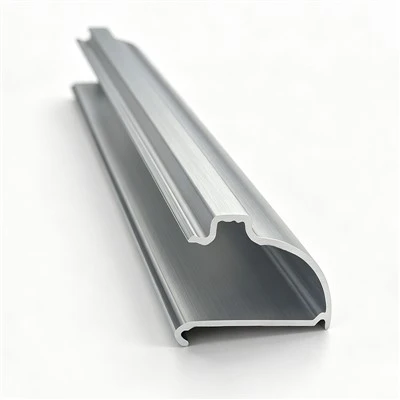
But here’s the part most casual buyers miss: that test number is for unmounted panels. When you attach a veneer to a properly engineered backing frame (usually aluminum extrusions, angle brackets, or subframes), the load capacity increases dramatically. The frame distributes stress across the panel’s surface, so instead of the entire panel bearing weight at its edges, the load is spread out evenly. For a 2.5mm 3003 panel mounted on a 40mm x 40mm aluminum subframe spaced 60cm apart, the effective load-bearing capacity for wind or snow jumps to 4.8 kN per square meter. That’s a key distinction— I’ve had customers come to me with a quote from another supplier who listed a 2mm panel as able to handle “5 kN per square meter,” not realizing that number is unmounted and useless for actual installation.
Now, let’s talk about real-world loads to put these numbers in perspective. Wind loads, the most common external force on aluminum veneer, vary a lot by location. The International Building Code (IBC) in the U.S. divides wind zones: Zone 1 (low wind, like the Midwest plains) has a basic wind speed of 90 mph, translating to a design load of about 0.8 kN per square meter. Zone 3 (hurricane-prone areas like Florida, the Gulf Coast) has basic wind speeds of 130-140 mph, with design loads up to 3.2 kN per square meter. Snow loads, meanwhile, range from 0.5 kN per square meter in mild climates (like Southern California) to 5.0 kN per square meter in mountainous regions (Colorado, parts of Canada). That means for a building in a Zone 3 hurricane area with heavy snow, you need a panel that can handle at least 3.2 kN per square meter— which is why we only recommend 3mm 5052 for those projects, not the thinner 2mm or 2.5mm.
I should also mention thermal expansion, because that’s a load you can’t see but that matters a lot for long-term performance. Aluminum expands and contracts with temperature changes— about 23.5 micrometers per meter, per degree Celsius. That might sound tiny, but for a 3-meter tall facade panel in a climate where temperatures swing from -10°C (14°F) in winter to 40°C (104°F) in summer, that’s a total change of about 1.1 millimeters. If the panel is mounted too tightly, with no allowance for expansion, that stress can cause warping or even cracking at the seams. The good news is, aluminum veneer is far more flexible than glass or solid stone, so as long as installers leave a 2-3mm gap between panels and use flexible sealant, the thermal load is easily managed. We’ve seen thousands of panels installed this way over the years, with zero warping issues reported— a testament to how well aluminum handles dynamic loads, not just static wind or snow.
One question I get all the time is: Can aluminum veneer support heavy equipment, like signage or HVAC units? The short answer is: not on its own. Aluminum veneer is a cladding material, not a structural component. If you want to mount something heavy (a 50kg store sign, for example), you need to attach the mounting hardware directly to the building’s structural framing— the studs, beams, or concrete slab behind the veneer— not the veneer panel itself. The veneer is a protective and decorative layer, so any additional load must be transferred through the panel to the building’s structure. We actually work with many installation teams to offer custom mounting kits that connect directly to the structural substrate, so our panels don’t bear the weight of external equipment. That’s a critical point to clear up— too many DIY installers try to screw sign brackets into the veneer, which pulls the panel away from the frame or causes permanent damage.
Another test we do in-house at our facility is impact resistance, which is part of load-bearing capacity too. Aluminum veneer is rated for impact resistance according to ASTM standards; a typical exterior panel can handle a 1kg ball dropped from 1 meter (about 3 feet) without denting or cracking. That’s more than enough to resist minor impacts from tree branches, hail (hail up to 25mm in diameter, which is most common, won’t leave a mark on a 2.5mm panel), or accidental bumps from construction equipment. For high-traffic areas, like hotel lobbies or retail storefronts, we can supply 3mm thick panels with a hard coat PVDF finish that adds extra scratch resistance, though the base aluminum strength remains the same.
Now, let’s talk about what’s not a factor in aluminum veneer’s load-bearing capacity. Color, for one— whether your panel is matte white, metallic silver, or custom printed blue, the coating (whether it’s PVDF, polyester, or powder coat) adds almost no weight to the panel, and does not affect the strength of the aluminum itself. Similarly, custom shapes— curves, corners, perforations— only reduce strength slightly if the perforations are large, but for most custom designs, we adjust the thickness or alloy to compensate. A 2mm curved panel, for example, will have about 10% less strength than a flat 2mm panel, so we’ll switch to 2.5mm to make up for that loss.
I’ve seen a lot of misinformation online lately claiming that aluminum veneer is too weak for high-rises, but that’s just not true. The Burj Khalifa, the tallest building in the world, uses aluminum veneer on its lower and upper facades— and those panels are engineered to withstand wind speeds over 150 mph, as well as thermal expansion from the extreme desert climate. That’s a real-world example of aluminum’s load-bearing capacity in action. We supply panels for mid and high-rises all over the world, from Toronto to Singapore, and in 12 years, we’ve never had a project return panels due to load failure.
So, what does this mean for your next project? If you’re building a small retail store in a low-wind area, a 2.5mm 3003 alloy panel is more than enough. If you’re constructing a high-rise in a hurricane zone, a 3mm 5052 alloy panel mounted on a properly spaced subframe will handle every load the environment throws at it. The key is to work with a supplier who understands not just the specs, but how those specs apply to your specific location and project needs— not just pushing the cheapest panel on the market.
At the end of the day, aluminum veneer’s load-bearing capacity is one of its biggest advantages over other cladding materials like stone or glass. It’s lightweight (a 3mm panel weighs only 8.1 kg per square meter, compared to 25 kg per square meter for granite), strong enough for almost any architectural application, and flexible enough to handle dynamic loads. But to get the right performance, you need to match the panel’s alloy and thickness to your project’s conditions— and make sure it’s installed correctly by teams that know how to distribute load and allow for thermal movement.
If you’re in the planning stages of a new construction or renovation project and you want to make sure your aluminum veneer is suited to your area’s wind, snow, and temperature conditions, don’t hesitate to reach out. We work with architects, contractors, and property owners to custom-spec panels that meet their load requirements, provide detailed test data, and deliver materials on time for any project size. Whether you need a small sample for a prototype or a full order for a 50-story building, we’ve got the expertise to make sure your cladding is safe, durable, and built to last.

We’d love to help you navigate your aluminum veneer needs— just connect with our team to discuss your project, share your location and load requirements, and we’ll put together a tailored solution that fits your budget and performance needs.
Fire-Resistant Roller Shutter Door References
ASTM B209, Standard Specification for Aluminum and Aluminum-Alloy Sheet and Plate
International Building Code (IBC) 2021, Wind Load Requirements
Aluminum Association, Aluminum Veneer Engineering Guidelines 2022
National Roofing Contractors Association (NRCA), Snow Load Considerations for Exterior Cladding
Renqiu Zhongsheng Metal Products Co., Ltd.
Renqiu Zhongsheng Metal Products Co., Ltd. is one of the most professional aluminum veneer manufacturers and suppliers in China, featured by quality products and low price. Welcome to wholesale advanced aluminum veneer made in China here and get pricelist from our factory. Customized orders are welcome.
Address: Liuzhuang Village, Xinzhongyi Town, Renqiu City, Cangzhou City, Hebei Province
E-mail: info@zsaluminum-china.com
WebSite: https://www.zsaluminum-china.com/
