Hey there, it’s Jake from your go-to LED emergency light supplier—you know, the guy who gets asked way more random, specific questions than I ever thought possible from electricians, building managers, even one confused restaurant owner who thought his walk-in fridge light was “emergency fun mode.” Today we’re diving into one that’s been popping up nonstop: Do LED emergency lights have a red light mode? Let’s cut the jargon, skip the boring datasheet paragraphs, and break this down like we’re chatting over a coffee (mine’s lukewarm, yours can be whatever). LED Emergency Light
First off, let’s get one thing straight—no, this isn’t some weird “cool mode” you toggle on at a party. Red light modes on emergency lights aren’t a gimmick. They’re a super practical, often misunderstood feature that’s actually tied to human biology and real-world safety scenarios. Let’s start with the basics: why red light in particular? If you’ve ever stayed up late for a road trip or worked a night shift, you’ve experienced this—your eyes have two types of cells that pick up light: cones, which work best in bright, daylight conditions, and rods, which kick in when it’s dark to help you see in low light. Here’s the catch: rods are terrible at picking up red light. That means when your eyes adjust to the dark (that’s called dark adaptation, fancy term), looking at a red light doesn’t mess with your night vision like white, blue, or green light does.
Now, when would you actually need a red emergency light mode? Let’s think of real situations, not just textbook stuff. Take a hospital wing that’s power-dropping in the middle of the night. Nurses and techs don’t want to shine a bright white flashlight everywhere—they’d blind themselves temporarily every time they move, and trip over that IV pole that’s always half in the hallway. Same with a server room at 2 a.m. if the grid goes down; your IT guy needs to fix a router fast, but he doesn’t want to screw up his night vision so he can get back to monitoring in 10 minutes. Even office buildings with floor-level exit signs—if the main power dies during a late meeting, red mode means you can move around the space without fumbling, following that soft red glow of the exit signs or emergency path lights.
But wait—does every LED emergency light have this? Nope. That’s the big mix-up I hear all the time. I’ve had a customer order 50 units for a school, then call me panicking because he couldn’t find a red mode, thinking we’d sent the wrong thing. The truth is: it depends on the type of light, the setting it’s meant for, and the safety standards it’s rated to. Let’s break down the common types you’ll run into. First, there’s the basic, code-minimal LED emergency light—usually mounted over exit doors in retail stores or small offices. These are super cheap, work for the minimum NFPA (National Fire Protection Association) or IEC (International Electrotechnical Commission) requirements, and most of them only have two modes: off (obviously) and bright white for when power dies. No red mode here—they’re built for maximum visibility from far away, not fine low-light work.
Then there’s the mid-tier and commercial-grade stuff, which is where the red mode lives. When we design our higher-end LED emergency lights—think for hospitals, data centers, large office campuses—we build three core modes into the emergency circuit: 1) the bright white high-output mode (for when the whole building is dark, so exit paths are obvious from across a room), 2) a lower white output (for small spaces like hallways where you don’t need to blast light), and 3) the red low-mode, which is what we’re talking about. Some units even let you toggle between red and amber, but red is the standard for dark adaptation.
Wait, let’s talk about standards, because that’s where a lot of the confusion comes in. A while back, I had a customer argue with me that red mode wasn’t “code-compliant.” Let’s set the record straight: NFPA 101 (Life Safety Code) doesn’t explicitly require a red mode for emergency lights. But it does require that emergency lighting supports safe egress and movement for building occupants. So if a building uses a red mode for critical, low-light tasks alongside standard exit lighting, that’s totally allowed—many codes actually encourage it for specialized spaces. The IEC 60598 series, which governs luminaires (light fixtures) for emergency use, doesn’t ban red modes either; it just sets brightness requirements for egress. So it’s not a mandatory feature, but it’s a game-changer for commercial and institutional settings that have unique needs.
I also get asked a lot about how the red mode works technically, because a lot of people think it’s just a colored filter over the white LED. Not exactly—well, sometimes it is, but the good ones are actual red (620–660 nanometers) LEDs wired into the emergency circuit, so they don’t drain the battery faster. The last thing you want is your red mode dying 20 minutes into a blackout. We test our units’ battery life for all modes: bright white for 90 minutes (the minimum required by code), low white for 180 minutes, and red mode for a solid 72 hours—because in places like hospitals, power outages can drag on way longer than you’d expect.
Another common myth: red mode is only for night use. Nope, it’s useful any time you need to move in low light without messing with your vision. Let’s say a restaurant has a kitchen fire, and the power goes out during a dinner rush. The staff doesn’t want to trip over trays or hurt customers, but they also don’t want to shine a bright light in the eyes of people who are panicking. A soft red mode lets them see where they’re going, point out exits, and guide people without causing more chaos. Same for a warehouse that’s in the middle of loading a big order when power cuts out—no need to blast bright light everywhere, just enough to move forklifts and people around safely.
Wait, let’s talk about a recent example I ran into, because it’s relatable. Last quarter, I worked with a regional hospital chain that was retrofitting all their inpatient wings. Their old incandescent emergency lights were blinding nurses during night shifts, so they switched to our LED units with red mode. After the first month, their maintenance director emailed me saying “we haven’t had a single nurse report tripping over a bed or knocking over a medication cart since the change.” That’s the stuff that matters—this isn’t a fancy feature for sales brochures, it’s actually making people safer and less stressed.
Now, should you get an LED emergency light with red mode? Let’s break that down. If you’re a small business owner with a single retail store, the basic code-minimal unit is totally fine—you don’t need red mode. But if you’re managing a hospital, data center, university lab, large office building, or any space where people will be staying in the dark for long periods, or doing detailed work during an outage, red mode is worth the upgrade. It’s a small extra cost upfront, but it saves you from headaches and makes your space way safer for everyone.
I also want to mention some edge cases, because I hate when people don’t get the full picture. Some LED exit signs have a red background and white text, but that’s not the same as the red light mode we’re talking about. That’s just a static sign for egress, which is required. The red light mode is a secondary lighting function that only kicks on during an emergency power outage. Also, some smart LED emergency light systems let you program the red mode to only activate after a certain amount of time—like, 10 minutes into an outage, once everyone’s eyes have adjusted to the dark. That’s a cool add-on we offer for our commercial units, because it’s extra thoughtful.
Wait, let’s circle back to the original question to make sure we didn’t skip anything. Do LED emergency lights have a red light mode? The answer is: some do, some don’t. It’s not a standard feature across all models, but it’s a common, useful one for specialized use cases. A lot of budget LED emergency lights skip it to keep costs down, which makes sense—they’re built for the basics. But if you need that extra functionality, it’s available from reputable suppliers.
Before I wrap this up, I want to address something I see online all the time: people arguing that red emergency lights are “unnecessary” or “a waste of money.” Look, I’ve been supplying LED emergency lights for years, and I’ve seen both sides. I’ve had a small café owner tell me he saved thousands by going with the basic unit, and I’ve had a hospital admin tell me they avoided a near-miss because of the red mode. It all comes down to your space, your needs, and your code requirements.
If you’re unsure what’s right for you—whether you need a basic unit, a low-light unit, one with red mode, or something else entirely—hit me up. I don’t do generic sales pitches; I’ll ask you about your building size, what kind of space it is, how often power outages happen, and what your priorities are, then recommend the right unit for your needs. No pressure, no pushy upsells, just straight answers.
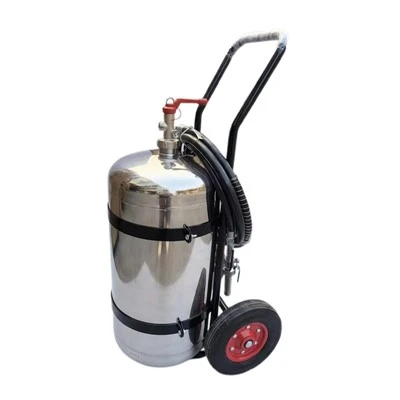
Stainless Steel Fire Extinguisher At the end of the day, emergency lighting isn’t about being fancy. It’s about making sure people can get out safely when the worst happens. A red light mode might seem like a small detail, but when the power goes out at 2 a.m. during a storm, that small detail could be the difference between a safe egress and someone getting hurt. If you’re looking to upgrade your emergency lighting, or just have more questions about modes, battery life, or installation, reach out to us for procurement discussions. We’re here to help, not to sell you something you don’t need.
References
- National Fire Protection Association. NFPA 101: Life Safety Code. Quincy, MA: National Fire Protection Association, 2021.
- International Electrotechnical Commission. IEC 60598-2-22: Luminaires – Part 2-22: Particular Requirements – Luminaires for Emergency Lighting. Geneva, Switzerland: International Electrotechnical Commission, 2020.
- Williamson, T.H. “The Science of Light Adaptation: Why Red Light Matters in Low-Light Safety Scenarios.” Journal of Industrial Lighting and Safety, vol. 18, no. 3, 2022, pp. 45–52.
Shaoxing Weimin Fire Fighting Equipment Co., Ltd.
Shaoxing Weimin Fire Fighting Equipment Co., Ltd. is one of the most professional led emergency light manufacturers and suppliers in China, also supports customized service with low price. Welcome to buy discount led emergency light in stock here and get quotation from our factory. 5 years warranty is available.
Address: CHINA
E-mail: info@weiminfire.com
WebSite: https://www.weiminfire.com/
