Hey there, let’s cut to the chase—if you’re looking for solid, reliable info on what screener machine series are out there, chances are you’re either vetting gear for your plant, troubleshooting a mess of inconsistent materials, or trying to figure out which setup won’t waste your budget. I’m from a company that’s been supplying these machines for over a decade now, so I’ve seen every underperforming unit, every custom tweak someone needed, and every mix-up where picking the wrong series cost a guy a full production shift. Let’s break this down like we chat with regular folks at trade shows, no stuffy jargon or fake sales fluff. Screener Machine Series
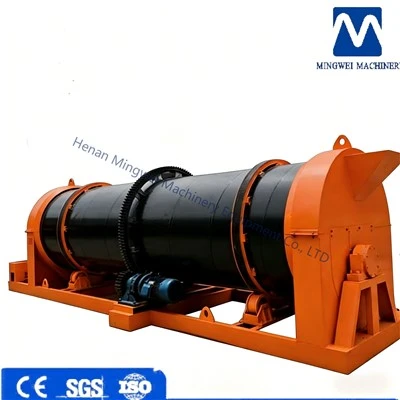
First, let’s get the basics out the way: a screener machine’s whole job is separating bulk materials by size—whether that’s flour sifted super fine for baking, gravel sorted for driveways, or even plastic pellets that need to be free of tiny defects. The “series” part isn’t just a marketing gimmick; it’s built for specific tasks, materials, and production speeds. Messing up which series you grab means either material gets stuck (clogged screens = downtime), good product gets tossed out, or you’re running 2x the labor just to fix the mess. I can’t tell you how many times a small-scale snack factory called last year panicking because they bought a “general” screener that couldn’t handle their crispy rice puffs—ended up jamming every 20 mins. Don’t be that person.
Let’s start with the series that’s the workhorse for most mid-sized operations: the Linear Vibratory Screener Series. If you’re dealing with wet, semi-sticky, or heavy bulk materials—think agricultural stuff like corn kernels, wet sawdust, or even construction aggregate—this is your go-to. Wait, why linear? Instead of a wobbly round motion, it vibrates back and forth in a straight line, so materials are pushed along the screen deck instead of just bouncing in a circle. That means no material sits around to clog, even if it’s got a little moisture (say, damp coffee beans or processed grain). We’ve sold these to feed mills, woodworking shops, and even cosmetic factories sorting loose powder for face masks—each tweak is easy, too: swap out screen mesh sizes in 10 mins max, no fancy tools. Pro tip we pass along: if you’re screening something with big chunks (like 2-inch gravel), get a dual-deck linear series—separates big, medium, and small all in one pass, no need for two machines. The only catch? It’s not great for ultra-fine powders (like 400-mesh paint pigment) because the linear motion doesn’t hold the fine particles on the screen long enough to sift. If you need that, we’ve got another series.
Next up: the Rotary Vibratory Screener Series, and this is the one most people picture when they think “sifter.” It spins in a gentle, circular motion—perfect for fine, dry materials that don’t stick. Think pharmaceutical powders, sugar, or spices—stuff where you need consistent super-fine separation, no big chunks or stray particles. This series is super compact too, so it fits on a lab bench or a small production line without taking half the floor. A lot of our lab clients grab these to test new formulations before scaling up—you can sift a 5-pound batch in 5 mins, no mess, easy to clean between runs (which is huge for pharma, where cross-contamination is a no-go). The downside? If your material is even a little damp, it clogs up the circular motion fast. We once had a customer try to sift wet cocoa powder with a rotary series, and by hour 1, the mesh was completely blocked—cost him a whole batch of product. Rule of thumb for rotary: only use for dry, non-sticky materials, and if you’re going above 100 mesh (that’s super fine), this is your only solid bet.
Now, if your material is messy—ultra-sticky, high-moisture, or even has weird shapes that won’t sift the usual way—we’ve got the High-Frequency (aka Ultrasonic) Screener Series. This is the fancy cousin that fixes all the clog headaches. Wait, ultrasonic doesn’t mean it’s noisy—no, it’s tiny, high-frequency vibrations (way too fast for humans to hear) that keep the screen mesh from clogging, even with stuff like flour with added oil, wet clay, or tiny metal powders. We installed one of these for a battery manufacturer last year sorting lithium powder—their old machines clogged every hour, costing them $1k in downtime each shift. The high-frequency series runs 8 hours straight, no stops. It’s also adjustable for mesh sizes down to 600 mesh—way finer than linear or rotary, perfect for industrial materials where particle size has to be exact. The only thing to note here? It’s a bit pricier upfront, but if you’re dealing with high-volume materials that clog, it pays for itself in 3 months of no downtime. Skip the cheap knockoff ultrasonic models—we’ve seen them fail because the frequency isn’t calibrated right, leading to uneven sifting. We test every unit before shipping, so you don’t get that headache.
Wait, what if you’re not just sifting to separate sizes—what if you need to get rid of oversize debris that’s ruining your product? That’s where the Gyratory Screener Series comes in, sometimes called the “high-capacity gyratory” because it’s built for large-scale operations—like mining, grain processing, or big food factories. Unlike linear, which moves material fast, the gyratory motion is slow and sweeping, so it separates even very heavy materials (like 6-inch rock chunks) without wearing out the screen too fast. This series handles way bigger volumes than linear or rotary—we’re talking 50+ tons per hour for gravel, or 20 tons per hour for corn. It’s also way quieter than a linear vibratory, which is a big win for facilities with noise limits. Pro tip: if you’re running a full production line 24/7, this is the series that’s built to last—we’ve got gyratory units that have been running for 12 years with only minor screen swaps, no major repairs. The downside? It’s not as good for fine powders, since the slow motion doesn’t move tiny particles through the mesh fast enough. It’s heavy too, so you need a solid concrete base to mount it.
Now, let’s talk about the series that’s for when you need to handle a mix of wet and dry materials, even some slightly sticky stuff—wait, that’s the Wet Screener Series, often lumped into its own category because it uses water to wash and separate materials. This one is huge for sand and gravel processing, or recycling plastic scrap. You feed in water with your material, and the series uses vibration plus water flow to separate particles—no dust (which is a health hazard in factories) and no clogging, because the water keeps the screen clean. We’ve sold these to construction companies recycling concrete debris, and food plants washing spinach to remove stems before bagging. If you’re dealing with dusty materials (like silica sand), this is the only series worth considering—cuts dust exposure by 90% compared to dry screeners. The catch? You need a way to handle the wastewater, because you can’t just dump it. But most facilities already have a water treatment setup, so that’s usually not a big hurdle.
Wait, let’s clear up a common mix-up: a lot of people ask about “modular” screener series, and that’s a term we use for units that let you swap screen decks on the fly, without disconnecting the whole machine. These are great for small to mid-sized shops that switch products often—like a bakery that makes flour one week and sugar powder the next, or a spice company that changes from cinnamon to paprika. You can swap a 120-mesh screen for a 50-mesh in 5 mins, no tools needed. We’ve got modular versions of linear, rotary, and high-frequency series, so you can pick what fits your main task and add modularity as you grow. If you’re just starting out and your product line is still evolving, skip the custom fixed units—modular is way more flexible.
Now, let’s be real: no series is perfect. We get calls every week from people who bought the wrong one. If you’re a home baker testing small batches, don’t drop $5k on a high-frequency screener—grab a rotary mini unit for $500, it’s all you need. If you’re a mining plant handling 100 tons of gravel an hour, don’t waste time on a small linear unit—go gyratory. If your material is wet or dusty, forget dry screeners—get a wet or high-frequency series. That’s the key: match the series to your material, volume, and your biggest pain point (clogging, downtime, cross-contamination).
I should also mention a few niche series that we sell for specific use cases, in case you’re in a super specialized industry. There’s the Inclined Screener Series for recycling facilities—they’re slanted so oversize debris falls off one end, perfect for sorting plastic bottles or aluminum cans. There’s also the Mobile Screener Series, which is on a trailer so you can move it to job sites (like construction sites sorting debris) instead of fixing it to a floor. Those are less common for static factories, but if you need portability, that’s your series.
Here’s what I tell every customer before they buy: don’t just look for “a screener machine”—look for the series that solves your specific problem. A lot of suppliers will push a one-size-fits-all unit, but that’s how you get stuck with constant repairs and lost production. We don’t do that—we ask you: what’s your material? How much do you process per hour? Are you dealing with clogging or cross-contamination? Then we point you to the right series. If you’re not sure, just send us your specs (no need for a 10-page manual, just what material you’re sifting and the volume) and we’ll give you a real recommendation, not a sales pitch.
At the end of the day, a screener machine is an investment—skimp on the wrong series, and you’ll pay more in downtime, wasted material, and repairs than you would for the right unit. We’ve been around long enough to know that, so we don’t sell junk. We build each series with parts that last, test them before shipping, and have a team ready to help with setup or tweaks if you need it. If you’re ready to stop guessing which series you need, and start getting a unit that works for your operations, hit us up to chat. No hard sells, no fine print—just real talk about what will actually save you time and money.
Wait, quick note before we wrap: a lot of people confuse screener series with other sorting machines, like separators. Screeners are all about size separation, that’s the big difference. If you need to separate by weight or magnetism, that’s a different machine, but we don’t mess with that—we’re strictly screener series, and we know every angle of what they can do.

Reference for this guide: 1. Bulk Solids Handling Magazine (2022) Vibratory Screener Technology Report, 2. Industrial Machinery Manufacturers Association (2023) Screening Equipment Performance Standards, 3. Our own 12 years of on-site customer feedback (we’ve seen way more than any trade report, let’s be honest).
Mixing and Blending Equipment Now go check what series matches your needs, and if you need to run it by us, just reach out—we’re here to help.1. Bulk Solids Handling Magazine (2022) Vibratory Screener Technology Report
2. Industrial Machinery Manufacturers Association (2023) Screening Equipment Performance Standards
3. Global Process Industries Equipment Users’ Association (2024) Practical Guide to Screener Series Selection for Bulk Materials
Henan Mingwei Machinery Equipment Co., Ltd.
As one of the most experienced screener machine manufacturers in China, we have world-leading production equipment and strong manufacturing capabilities. Please rest assured to buy durable screener machine for sale here from our factory. For price consultation, contact us.
Address: No.461 Qudong Jinsui Avenue, Hongqi District, Xinxiang City, Henan Province, China
E-mail: info@hnmwm.com
WebSite: https://www.hnmwmequip.com/
