If you’ve ever stood next to a piece of industrial machinery, a truck’s transmission, or a clutch system mid-operation, you might’ve caught the acrid, burnt smell of a friction disc overheating. As someone who’s spent 12 years as a friction disc supplier, I’ve seen every version of this problem: a customer calls at 2 a.m. because their production line shut down, their original disc warped so bad it seized the entire gearbox, and they’re now hunting for a replacement that won’t fail again fast. Over the years, I’ve learned that overheating isn’t a random glitch—it’s a symptom of a mix of design choices, installation mistakes, and operating habits, most of which are entirely preventable. Let’s break down why this happens, what it means for your equipment, and how you can avoid it so your friction discs do what they’re supposed to, no burnt rubber or seized parts required. Friction Disc
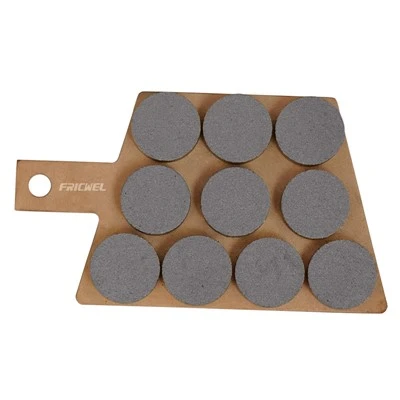
First, let’s start with the basics of how a friction disc works. This component is the workhorse of any system that transfers mechanical power via friction—think a clutch between a truck’s engine and transmission, or a brake disc in a conveyor system. When you need power to move from one part of the machine to another, the friction disc presses against a mating surface (usually a flywheel, pressure plate, or opposing disc) and generates friction, which converts that kinetic energy into motion. But that friction doesn’t just disappear—it turns into heat, right where the two surfaces touch. A good friction disc is engineered to manage that heat efficiently: its friction material is formulated to dissipate heat rather than trap it, and the steel core is built to conduct heat away from the contact area fast. If that balance breaks, heat builds up faster than it can escape, and that’s when overheating starts.
One of the most common causes I see is too much slippage. Slippage is when the two surfaces of the friction disc and its mating plate don’t spin at exactly the same speed, so instead of smooth, consistent power transfer, you get constant, small-scale friction between them. For example, a new driver in a big truck might hold their clutch halfway pressed at a stop sign—this means the friction disc is slipping against the pressure plate for minutes at a time, generating far more heat than it would in normal, full engagement. I once had a logging company customer bring back a set of discs after three weeks of use; they’d been slipping their winch clutch to drag heavy logs over uneven ground, and the friction material had charred so bad it was crumbling. That’s avoidable, but slippage doesn’t only happen with human error. If a clutch is misaligned during installation—say the pressure plate isn’t centered perfectly on the flywheel—the friction disc will only make contact in patches, causing localized slippage that traps heat in those small spots. Even minor misalignment (less than a tenth of an inch) can double the heat generated in some areas of the disc, leading to warping or cracking over time.
Next up: heat that can’t escape, plain and simple. Friction discs rely on airflow, or sometimes the thermal mass of their core, to move heat away from the contact surface. If that cooling path is blocked, heat builds up until it damages the disc. For example, take a small industrial clutch in a packaging machine that’s housed in a tight, enclosed cabinet. Over time, dust, lint, and metal shavings from other parts of the machine settle on the friction disc’s surface, clogging the small gaps between its pad segments. That not only increases slippage, but it also traps heat right against the disc’s core—no airflow can get through to cool it. I’ve seen cases where a customer cleaned a few grams of lint off a disc and saw its operating temperature drop by 150 degrees Fahrenheit instantly, a difference that keeps the disc from failing prematurely. Similarly, some aftermarket friction discs use too thick a friction material layer. That might seem like a good idea to extend the disc’s lifespan, but extra thickness adds mass that slows heat dissipation, and it takes longer to reach full engagement, leading to more slippage and heat over time. A lot of suppliers cut corners here, but the right balance is key—too thin and the disc wears out fast, too thick and it overheats.
Then there’s the issue of wrong material selection for the application. Friction discs aren’t one-size-fits-all, and using a disc designed for light-duty use in heavy-duty machinery is a recipe for overheating. For example, a residential lawn mower’s friction disc is made of a soft, organic material that works for low-torque, short runs, but if you put that same disc in a farm tractor that’s pulling a plow for 8 hours a day, the organic material can’t handle the constant high torque. It starts to glaze over—when the friction surface heats up so much that it melts into a hard, shiny layer that reduces grip, forcing more slippage to get the same power transfer, which makes even more heat. I had a customer in the construction industry who made this mistake: they used a general-purpose friction disc for their concrete mixer, and within two months, the disc was so glazed it had to be replaced. When we switched them to a ceramic friction disc, which is formulated to handle high heat and high torque, their operating temperature dropped by 200 degrees, and the discs lasted 10 times longer. It’s not just torque, either—environments matter. If a disc is used in a wet, dusty mine, a standard friction disc will have its surface contaminated, increasing slippage and heat, whereas a disc with a reinforced, water-resistant coating performs far better.
Misuse and overloading also top the list. Every friction disc has a maximum torque rating, the amount of force it can transfer without generating too much heat or wearing out. If you exceed that rating—say you load a conveyor system with twice the weight it’s designed for, so the friction disc has to work harder than it was built to—heat spikes. That extra torque means the disc has to slip more to move the load, and the heat generated is exponential, not linear. I had a mining customer last year who ran a conveyor line for six months at 150% of its design capacity; the friction discs would overheat during every shift, warping so bad the conveyor would stop mid-batch. Once they adjusted the load to the design rating, the discs ran at a safe temperature, with no more failures. Another common misuse is riding brakes or clutches—something as simple as a driver keeping their foot on the clutch while moving (to adjust speed slightly) adds constant slippage, which builds up heat even during short trips. I’ve seen a delivery truck’s friction disc fail after just one month because the driver regularly rode the clutch to avoid shifting at stops, a habit that generates more heat in a single month than normal use would in a year.
Now, what happens when a friction disc overheats, beyond just a burnt smell? The damage is progressive, so it’s not just a one-time failure. First, the friction material starts to degrade: the binders that hold the material together break down, so the pad starts to crumble or wear unevenly. As the disc heats past 500 degrees Fahrenheit (a common threshold for overheating in most industrial discs), the steel core begins to warp—even a small warp of a few thousandths of an inch is enough to cause vibration, more slippage, and more heat. At higher temperatures (over 750 degrees), the steel core can lose its tensile strength, meaning it can’t handle the pressure from the pressure plate, leading to a complete seizure of the clutch or brake system. I’ve seen entire transmission assemblies replaced because a single overheated friction disc warped a flywheel so bad the whole unit had to be pulled apart, costing 10 times more than a simple disc replacement.
So, what can you do to prevent this? First, get the right friction disc for your application. Don’t just pick the cheapest option—talk to a supplier who can help you match the disc’s material, torque rating, and cooling design to your machinery’s use case. For high-heat environments, ask for discs with improved heat dissipation, like vented steel cores or ceramic friction materials. Second, check alignment and installation: a quick alignment check during installation can prevent the localized slippage that causes most overheating. Third, maintain your equipment regularly: clean the friction disc’s surface to remove dust, lint, or debris that clogs airflow, and inspect for uneven wear or glazing. If you notice a burnt smell or unusual vibration from your clutch or brake, don’t ignore it—that’s an early sign of overheating, and catching it early saves you from a full system failure. Finally, stick to the design ratings: don’t overload your machinery, and train operators to avoid habits like riding clutches or holding halfway pressed clutches.

As someone who’s worked with friction discs for years, I can tell you that overheating isn’t a flaw in the component—it’s a mismatch between the disc’s design and how it’s used. Every customer I’ve helped fix an overheating issue has seen not just fewer failures, but also lower maintenance costs and longer equipment lifespan. If you’re dealing with repeated friction disc overheating, or you want to make sure your next set of discs is built to handle your operation’s demands, don’t hesitate to reach out. We’ve helped everything from small packaging lines to heavy mining operations find the right solution, and we can help you avoid the downtime and repair costs that come with preventable overheating.
Racing Clutch Buttons References
- Kren, A. (2019). Friction Materials for Automotive and Industrial Applications. Society of Tribologists and Lubrication Engineers.
- Blau, P. J. (2008). Friction Science and Technology. CRC Press.
- Industrial Clutch and Brake Association. (2021). Best Practices for Friction Component Installation and Maintenance.
Fricwel Automotive Limited
Fricwel Automotive Limited is one of the most experienced friction disc manufacturers and suppliers in China, also supports customized service with low price. We warmly welcome you to buy advanced friction disc made in China here from our factory. Also, free sample is available.
Address: No. 819 Shixin Zhong Rd, Xiaoshan, Hangzhou 311203, China.
E-mail: sales@fricwelauto.com
WebSite: https://www.fricwelfriction.com/
