If you’re a refrigeration tech, a facility manager, or a small business owner stocking parts, you know the frustration of grabbing a “compatible” part only to have it fail on the first install. Last month, I got an email from a client who’d ordered a condenser fan motor for their walk-in fridge—paid a premium for a part marketed as “universal for all 1/2 HP units”—and spent two hours swapping it out because the mounting bracket didn’t line up. That’s the problem with guessing when it comes to refrigeration accessories: one wrong detail on a model number can turn a quick fix into a major breakdown. Refrigeration Units Accessories
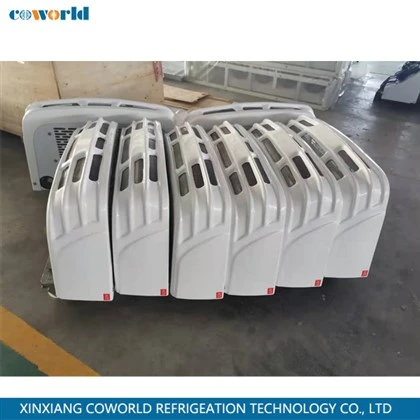
As someone who’s spent 12 years selling refrigeration units and their accessories, I’ve seen every mistake in the book. I’ve had clients return 30+ faulty defrost timers in a month because they read the model number wrong, and I’ve helped a grocery store avoid $15,000 in lost produce by walking them through how to decode their compressor part numbers in 10 minutes. The truth is, identifying compatible accessories by model number isn’t rocket science—it just takes knowing where to look and what to ignore. Let’s break this down step by step, no confusing jargon, no sales fluff, just what works from someone who’s lived this.
First, let’s get one thing straight: model numbers aren’t random strings of letters and numbers. Every major brand—Carrier, Trane, Copeland, Danfoss, whatever your unit is from—builds their model numbers to carry specific, standardized info about their refrigeration units and their parts. I always tell new customers to treat a model number like a receipt for their unit: it’s the only document that tells you exactly what’s inside, not just what’s on the outside. The worst call I ever took was from a restaurant owner who told me their unit was a “2018 walk-in fridge,” and I spent 20 minutes going in circles until they dug up the model number plate that said it was actually a 2016 undercounter refrigeration unit with a completely different compressor. If you don’t have the model number of your original unit, you’re guessing—and guessing leads to downtime.
Let’s start with where to find the unit model number. I can’t tell you how many people Google “how to find my refrigeration unit model number” and then give up because it’s not on the front of the fridge. For most commercial units, it’s either on a metal plate on the back of the compressor, inside the control panel, or stuck to the side of the condensing unit. For residential units, it’s often on the door frame or the ceiling of the fridge. Once you have that number, write it down—don’t just screenshot it and hope you get it right. Even one wrong character can lead to 10 incompatible parts in your cart.
Now, the fun part: decoding the unit model number to match accessories. This is where brands differ a little, but there are four core segments to look for across almost every major manufacturer that tell you what accessories work. Let’s use a real example to make this concrete: take Carrier’s 30RA024600. Let’s break that down:
- The first segment (usually 2-4 letters) is the brand and series. Carrier, Trane, and Copeland all have unique prefixes that you’ll recognize once you’re familiar with them. For our example, “30RA” is Carrier’s medium-capacity walk-in refrigeration series. This matters because a part made for a residential Carrier fridge (prefix like “RF”) won’t fit a commercial Carrier walk-in, even if they’re the same brand.
- The next two or three numbers are the capacity. Our example has “024” here. That’s a standard HVAC/ refrigeration number: 024 means 24,000 BTU per hour, which translates to roughly 2 tons of cooling. Why is this important? A defrost heater rated for 18,000 BTU won’t generate enough heat for a 24,000 BTU unit, and one rated for 30,000 BTU will overheat and burn out in a week. I had a customer learn that the hard way last year—they used a generic defrost heater for their 24k BTU unit and replaced it three times in two months before we got them the correct 24k rated one.
- The final segment is the unit type and configuration. For our example, “600” means it’s a low-temperature walk-in unit, not a medium-temperature one. Low-temperature units (like freezers) use different evaporator coils, fan motors, and defrost controls than medium-temperature units (like drink fridges or produce coolers). A medium-temperature fan motor will move too much air for a low-temp freezer, leading to frost buildup and higher energy bills.
- Bonus segment: if your model number has a letter at the end (like “A” or “B”), that usually means a revision. A part that works for “30RA024600A” won’t always work for “30RA024600B”—brands tweak minor components for efficiency or cost, and that letter tells you which version you have. I once sent a client a fan motor for the “A” revision, and it hummed loudly until we swapped it for the “B” revision part after checking the last character of the unit number.
Once you’ve decoded the unit model number, the next step is matching that to the accessory model number. Here’s where most guys go wrong: they search for “Carrier 30RA024 defrost timer” and pick the first result, but that’s not how it works. Accessories have their own model numbers, and those are directly tied to the unit model’s core specs. Let’s take defrost timers as an example, since that’s one of the most commonly misidentified parts. A defrost timer’s model number will have a segment that matches the unit’s voltage, amperage, and control type. For our Carrier 30RA unit, that means a 120V defrost timer with a 5A rating, not a 240V timer made for larger units.
But wait—what about cross-referencing? I get asked about cross-references all the time, and they’re a shortcut, but only if you use them right. A lot of online parts sites will tell you that accessory X cross-references to unit Y, but you need to confirm three things before you trust that: first, does the cross-reference specify the exact revision of your unit? Second, does it match the capacity you decoded earlier? Third, is the accessory compatible with the unit’s environment (low temp vs medium temp)? I once saw a cross-reference that said a certain condenser fan motor worked for all 024 BTU Carrier units, but it didn’t note that it was only for medium temp units—using it on a low temp freezer led to a complete compressor failure. Cross-references are helpful, but they’re not a replacement for decoding your model number.
Another big tip from my time in the business: always check the original equipment manufacturer (OEM) part number, not just the brand or unit model number. A lot of clients will tell me “my Trane unit needs a part” and don’t know that the compressor inside is made by Copeland. The OEM part number is printed directly on the accessory itself—on the side of the compressor, on the back of the fan motor, on the face of the defrost timer. If that number is legible, use it first. It’s the single most reliable identifier of a compatible part. I always keep a stack of sticky notes in my shop for this exact reason—when a tech is on a service call, I tell them to pull the part, write down the OEM number, snap a photo, and send it over. That cuts down on mistakes by 90% right there.
I also want to address the universal part myth, because it’s the most pervasive bad advice out there. When a sales rep tells you a part is “universal,” what they almost always mean is it works for a range of similar units—but that range is limited. There are very few true universal refrigeration accessories, and almost none for commercial units. Even a part like a gasket, which seems simple, isn’t universal. A gasket for a 6’x8’ walk-in fridge won’t fit a 4’x6’ unit, even if they’re the same brand, because the dimensions are different. Universal parts are a great last resort if you can’t find the OEM number, but they should never be your first choice. I’ve seen too many clients try to make a universal part work, spending hours modifying it with a saw and drill, only to have it fail and lose money on parts and labor.
Now, let’s talk about common mistakes I see every day, so you can avoid them. First, misreading the unit model number because it’s worn. A lot of older units have model number plates that have faded from oil and dirt, and a 0 looks like an 8 or a 1. If the plate is too worn, you can take photos of the unit’s compressor, control panel, and condensing unit and send them to a supplier that knows refrigeration parts—we can usually identify the model from photos. Second, confusing BTU tonnage. A lot of people mix up BTU and tons, forgetting that 1 ton is 12,000 BTU. So a 2-ton unit is 24,000 BTU, not 20,000 BTU, and a part rated for 20k BTU will be too small. Third, ignoring voltage. Commercial refrigeration runs on 120V, 208V, or 240V, and using a 120V part on a 240V unit will blow a fuse or burn out the part immediately. That’s a $100 part wasted in 10 seconds.
Wait a second—what about custom or niche units? I know a lot of specialty clients have units built for specific needs, like medical freezers that store vaccines, or deli cases that need precise temperature control. Those units have unique model numbers too, and the accessories are even more specific. I once worked with a pharmacy that had a 2019 medical freezer that used a custom evaporator fan—they couldn’t find it until they matched the model number’s niche segment, which said “medical grade.” If you have a specialized unit, don’t waste time searching for generic parts—send your model number to a supplier that works with custom refrigeration, and they’ll pull the right accessory.
So let’s recap the simple process, step by step, so you can do this today:
- Locate your unit’s model number (plate on compressor, control panel, or condensing unit). Write it down exactly, no typos.
- Decode the core specs from the number: brand series, BTU/capacity, unit type (medium/low temp), and revision letter.
- Find the original accessory part number for the part you need, either from the old part or the unit’s manual.
- Match both the unit’s specs and the accessory’s OEM number to confirm compatibility, using cross-references only as a secondary check.
- If you’re unsure, ask a refrigeration parts supplier—we’re here to help, not just sell parts.
I’ve said it a hundred times, and I’ll say it again: the biggest cost of choosing the wrong accessory isn’t the price of the part. It’s the cost of downtime, spoiled product, and the labor to replace it. For a grocery store, one day of walk-in fridge downtime can mean $20,000 in lost produce. For a restaurant, it can mean closing for a night, losing regulars. Taking 10 minutes to get the right part by model number will save you way more than that.
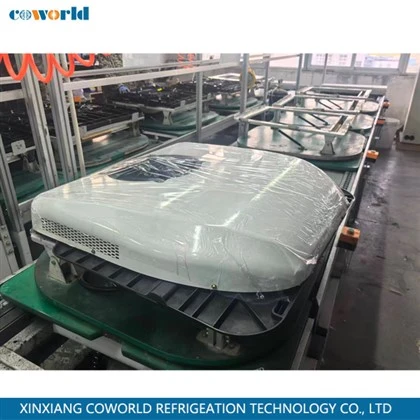
If you need help decoding a model number, verifying an accessory is compatible, or sourcing the exact part you need, don’t guess—reach out. We specialize in refrigeration units and their accessories, and we work with small businesses, techs, and facility managers every day to get the right part the first time. We don’t sell universal parts as a shortcut, because we know better than anyone what happens when you cut corners.
Refrigerated Truck Body References
ASHRAE. (2022). Refrigeration Unit Identification and Part Compatibility Standards. ASHRAE Handbook: Refrigeration.
Carrier Corporation. (2021). Commercial Refrigeration Model Numbering System Guide.
Copeland Compressors. (2020). OEM Part Numbering Specifications for Refrigeration Accessories.
U.S. Department of Energy. (2021). Commercial Refrigeration Part Compatibility Best Practices for Facility Managers.
Xinxiang Coworld Refrigeration Technology Co., Ltd.
As one of the most professional refrigeration units accessories manufacturers and suppliers in China, our products have good reputation in the market. We warmly welcome you to buy cheap refrigeration units accessories for sale here from our factory. If you have any enquiry about cooperation, please feel free to email us.
Address: B103 ROOM, GT CITY, NO.199 ZHENGZHONG ROAD, HIGH TECH ZONE, XINXIANG CITY, HENAN PROVINCE, CHINA
E-mail: coworldfrio@hotmail.com
WebSite: https://www.coworldthermo.com/
