If you’ve ever shipped freight from China to Australia by air, you’ve probably asked yourself this question at some point: how many packages can I actually send on this route? As a freight line supplier that’s worked with small online sellers, manufacturers, and importers across both countries for over a decade, I get this inquiry every single week. And the short answer is, there’s no one-size-fits-all number – but there are concrete, rule-based limitations that I need to walk you through, because cutting corners here is how shipments get stuck at customs, hit unexpected fees, or get turned away mid-transit. China To Australia Air Freight Line
First, let’s start with the basics that most people miss when they’re cramming for a busy sales period or trying to clear out a warehouse. When we talk about package limits, we’re not just counting individual cardboard boxes; we’re weighing two core factors: weight per unit, and total dimensional weight (volumetric weight) of your entire shipment. For our China to Australia air freight line, we operate with industry-standard IATA (International Air Transport Association) guidelines, but we also have tailored limits to protect both our aircraft partners and our clients from avoidable delays.
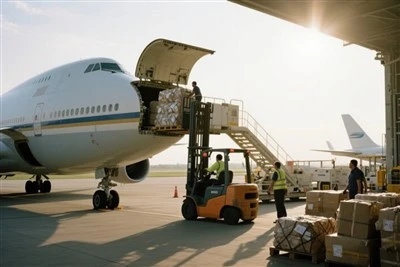
Let’s break that down. For standard small packages – think 10kg to 50kg each – our per-package limit is 50kg max. That’s non-negotiable, and here’s why: air freight pallets for this route are sized to hold loads that fit through standard cargo hold doors on Boeing 747s and 777s, the most common planes on the Shanghai, Guangzhou, and Shenzhen to Sydney/Melbourne/Brisbane lanes. A package over 50kg can’t be lifted by the small forklifts we use to load these pallets at Shanghai Pudong Airport, and forcing that often leads to ripped packaging, damaged goods, or even workplace injuries for our ground crew. We do offer special handling for heavy cargo over 50kg, but that’s reserved for palletized shipments – individual packages over 50kg will be flagged and require approval from our operations team before we’ll even accept them.
Now, if we’re talking about how many of those standard 50kg packages you can ship in a single consignment, that ties directly to total volumetric weight. Air freight uses a simple formula to calculate weight for pricing and space allocation: length x width x height (in cm) divided by 6000. So a package that’s very large but light – like 100 identical small pillows, each weighing 0.5kg but taking up 0.5 cubic meters – will have a higher volumetric weight than actual weight, and take up more space on the plane. For our China to Australia line, we set a total limit of 100 cubic meters per individual air waybill. That translates to roughly 200 standard 50kg cardboard boxes (each at 0.5 cubic meters, average for consumer goods like apparel, small electronics, or home decor) in a single shipment, assuming you’re not dealing with extra-bulky items like furniture or large machinery.
But wait, that’s not the only total limit to consider. We also cap total gross weight per air waybill at 10,000kg (10 metric tons). So if you’re shipping heavy items – like metal parts, tools, or bulk kitchen appliances – your total number of packages will be lower. For example, a set of 20kg metal tools per package means you can only send 500 of those in a single air waybill, because 500 packages x 20kg each is exactly 10,000kg. Exceed either the 100 cubic meter volume limit or the 10,000kg weight limit, and you’ll need to split your shipment into two or more separate air waybills. This isn’t a rule we made up; it’s aligned with the maximum pallet load for our contracted air carriers on this route.
Now, where do people run into trouble with number limits? They often assume that because their total weight undercuts 10,000kg, they can send 2000 small 5kg packages without a problem. But here’s the hidden limitation that most first-time importers don’t account for: customs and regulatory requirements in both China and Australia for large consignments of identical or similar goods. Australia’s Department of Home Affairs has strict rules for commercial imports, and if you have more than 50 packages in a single shipment that all carry the same product, same brand, and same value, you’ll need to provide additional documentation: a commercial invoice that lists each item’s serial number (if applicable), proof of origin, and, if the goods are subject to Australian Standards (like electronics or children’s toys), a compliance certificate.
We’ve had so many clients get tripped up here: one small Melbourne-based clothing seller tried to ship 180 identical t-shirt packages from Guangzhou in one air waybill, and Customs held the entire shipment for 12 days because they only submitted one general invoice instead of itemizing each package. That delay cost them over $3,000 in lost sales, because their stock didn’t hit their online store before a flash sale they’d planned. To avoid that, we offer a workaround: if you need to send more than 50 identical packages, splitting the shipment into two air waybills means you only need to provide the required documentation for two smaller batches, and you keep the total number per customs declaration within the limit that speeds up clearance.
Another common limitation is around hazardous or restricted goods, even if your total package count seems under the limits. Australia has very strict rules on what can fly into the country, and air freight lines have even stricter rules for what can be carried on passenger or cargo planes. For example, lithium-ion batteries – used in phones, power banks, electric bikes – can’t exceed 100 watt-hours (Wh) per package when shipped by air on this route. So even if you have 100 packages, each with a 50Wh battery, that’s within the weight limit, but if you have one package with a 200Wh battery, that package alone is rejected, regardless of how many other packages you send. We also cap the number of restricted goods packages per shipment at 10, across all types: aerosols, perfumes, food items with long shelf lives, and textiles that aren’t certified to Australian flammability standards all fall into this category. We work with clients to label these packages correctly and separate them from standard goods to avoid fines, but exceeding that 10-package limit means we need to coordinate with a specialized hazardous goods carrier, which adds cost and time.
What about for small businesses or individual sellers? I get that a lot of our clients run Shopify stores or eBay shops, shipping orders to Australian customers one at a time. For those clients, we offer a consolidated air freight service, where we combine multiple small packages from different senders in the same city (like Shenzhen or Yiwu) into a single consignment bound for a major Australian city. In that case, the package limit is different: each individual small package (under 30kg) can be added to our consolidated shipment, as long as the total volume and weight of the entire consolidated load stays under the 100 cubic meters and 10,000kg limit. We’ve consolidated up to 1,200 small e-commerce packages into a single air waybill before, but in that case, each individual package has to have a clear, Australian-specific shipping label with the recipient’s full address and contact info, because that’s what Australian customs requires for parcel-level tracking.
Wait, is there any scenario where there are no package limits? The short answer is no. Even for bulk cargo shipments – like a manufacturer sending a full container load of furniture to Australia – we still have limits per air waybill, because air carriers set maximum pallet sizes and weights for each flight. For bulk shipments, we can arrange for multiple consecutive flights, but each flight will have its own limits on how many packages (or pallets) it can carry, based on the aircraft’s cargo capacity that day. Seasonality plays a big role here too: during Australia’s peak shipping periods – like before Christmas, or during back-to-school season in February – air carriers reduce their cargo capacity to make room for passenger baggage, so the maximum number of packages per shipment drops by 20-30% during these times. We always notify our clients 4-6 weeks in advance when these limits go into effect, so they can adjust their shipping plans or book space early.
I also want to be clear: these limits aren’t arbitrary rules we set to make more money. We’ve built our business on reliability, and we’ve had clients push these limits too far – one client tried to send 120 cubic meters in a single air waybill to save a few hundred dollars, and their entire shipment was turned away at Shanghai Airport, costing them over $5,000 in re-routing fees and lost sales. Our job is to be transparent about these limitations so you can plan your shipments without unexpected headaches.
If you’re wondering how to calculate your exact package count, or if you have a shipment that’s on the higher end of these limits, the best thing to do is reach out to our team. We can run a quick check for you, adjust your shipment plan to stay within the rules, and even offer suggestions to split shipments to keep costs low and clear customs quickly. At the end of the day, our China to Australia air freight line is built to support your business, not create roadblocks – so don’t hesitate to connect with our sales team to chat through your specific needs, whether you’re shipping 10 packages or 10,000.
Large-item Logistics From China To Australia References:
- International Air Transport Association (IATA). (2023). Air Cargo Guidelines for Shippers.
- Australia Department of Home Affairs. (2024). Commercial Import Requirements for Air Freight Shipments.
- China Civil Aviation Administration. (2023). Maximum Cargo Limits for Transpacific Air Routes.
Shenzhen Kuaihui International Logistics Co., Ltd.
Shenzhen Kuaihui International Logistics Co., Ltd. is a leading China-Australia dedicated logistics service provider in China. As a professional agent and platform, we are committed to providing high quality china to australia air freight line with low price. Welcome to contact us for pricelist.
Address: 3rd Floor, Building 6, Nanbiantou Industrial Zone, Xifang, Songgang Street, Bao’an District, Shenzhen City, Guangdong Province
E-mail: info@kkhwl.com
WebSite: https://www.kuaihuiexp.com/
