Hey there, if you’re running a cylindrical grinding operation, you know firsthand how annoying excessive vibration can be. It’s the silent killer of precision—those weird, wobbly inconsistencies in your workpieces that make you reject perfectly good parts, waste time rework, and drive up costs. As a cylindrical grinding machine supplier, I’ve spent years troubleshooting this exact issue with shops just like yours, and let me tell you: it’s never a one-size-fits-all fix. Vibration comes from everywhere, and if you’re just guessing at solutions, you’re probably only addressing the symptom, not the root cause. Let’s break this down into actionable, real-world steps that actually work, no jargon fluff included. Cylindrical Grinding Machine

First, let’s get the basics right: where does machine vibration even start? Most folks think it’s just the grinding wheel, but that’s only part of it. I’ve seen brand-new machines straight out of the crate vibrate like a washing machine on spin cycle because their installation was garbage. Think about it—your grinding machine is heavy, sure, but if it’s sitting on a flimsy workshop floor that’s got cracks, uneven settling, or vibration from a nearby milling machine running 24/7, all that energy is going to transfer straight into your grinder. I recently worked with a job shop that was rejecting 15% of their hydraulic valve spindles because of chatter, and their floor was so uneven a level dropped between their lathe and grinder showed a half-degree tilt. Once we re-leveled and anchored the machine to a proper concrete foundation pad (not just bolted to the existing shop floor), their vibration dropped 40% overnight. Pro tip here: if you can, isolate the grinder from other machines on the shop floor—even a 6-inch rubber mat between the machine base and floor can absorb a ton of ambient vibration. Don’t skip this step; I’ve seen way too many shops waste money on upgraded bearings only to realize their floor was the problem.
Next up, the grinder’s own structural rigidity. Cylindrical grinders rely on several moving parts: the headstock that spins the workpiece, the tailstock that holds it in place, the worktable that slides back and forth, and the grinding wheel spindle. Any slack or play in these components is going to turn straight into vibration. Let’s start with the headstock and tailstock—those are the most common culprits. I once had a customer who was grinding bearing races and getting waviness on the inner diameter, and it turned out their tailstock quill had 0.002 inches of axial play when they tightened it. That tiny play might not sound like much, but at 10,000 RPM, it translates to a lot of force. Tightening the tailstock dead center properly (don’t just “snug” it, use a torque wrench to match the machine’s spec) and replacing worn quill bushings with precision-ground ones fixed their issue. Also, check the headstock spindle bearings—if they’re not preloaded correctly, they’ll develop play over time. A lot of shops loosen them to reduce heat, but that actually creates more vibration. We always recommend a light, consistent preload that’s enough to eliminate play without generating excess heat, and regular lubrication (using the right oil, not just whatever’s in the shop cabinet) keeps them running smooth.
Then there’s the worktable. The worktable that moves the grinding wheel back and forth has linear guides, right? If those guides are worn, or the ball screws that drive the table have backlash, you get that “stiction-slip” effect—where the table hesitates before moving, then lurches forward. That’s a major source of chatter. I had a customer with a high-volume automotive pinion grinding line who was experiencing vibration at table speeds above 500 mm/min, and their ball screw had 0.003 inches of backlash. Once we adjusted the backlash (or replaced the nut if it was too far gone) and lubricated the guides with a way cleaner, thinner oil instead of the heavy gear oil they were using, their chatter vanished. Another thing: the table’s ways should be aligned perfectly parallel to the grinding wheel axis. If there’s even a tiny angle mismatch, the wheel will rub unevenly against the workpiece, creating vibration. Use a dial indicator to check this—sliding it along the table while moving it the full length, and adjust the way gibs until it’s within 0.001 inches per foot. It sounds tedious, but it makes a huge difference.
Now, the grinding wheel itself—this is where a lot of shops make quick, bad choices. Everyone wants a fast grinding wheel that lasts, but a wheel that’s out of balance is a vibration bomb waiting to happen. I see this all the time: shops pull a brand-new wheel out of the box, mount it, and start grinding without balancing it. Even a tiny weight difference on a 12-inch wheel at 6,000 RPM creates centrifugal force that’s enough to shake the entire machine. Dynamic balancing is non-negotiable here. You don’t need a fancy lab-balancing machine—there are portable balancers that you can clamp on the machine itself, and they take 10 minutes to do. I also recommend truing the wheel before every new setup, not just once when you mount it. Truing removes the uneven wear, and dressing keeps the grit sharp and uniform. If your wheel is loaded with swarf (metal shavings from grinding), that unbalances it too—so make sure you’re using a good coolant with the right concentration, and a coolant filter that actually catches the fine swarf. I worked with a turbine shop that was using a 10-micron filter, but switching to a 5-micron filter cut their wheel unbalance by 25% and extended wheel life by 15%.
Wait, what about the workpiece itself? A lot of folks overlook that the part you’re grinding can contribute to vibration too. If the workpiece isn’t properly supported, or it’s a thin, long part that deflects under grinding force, that will create chatter. For example, if you’re grinding a 2-foot-long steel shaft that’s only 1 inch in diameter, the tailstock might not be enough to keep it rigid—adding a steady rest along the worktable can eliminate that deflection. Make sure the steady rest pads are adjusted evenly, with just enough pressure to support the part without pinching it. I once had a customer grinding small pump impellers and getting radial runout, and it turned out the impeller’s own thin walls were flexing during grinding. We added a custom soft jaw fixture that held the outer diameter without distorting the part, and their vibration went away. Also, check the workpiece itself for residual stress from previous operations—like turning or milling. That stress can release during grinding, causing the part to warp and vibrate. If you’re working with high-stress materials, do a stress-relief anneal before grinding, or use a slower grinding feed rate to reduce heat buildup that can trigger stress release.
Coolant is another big one that’s often ignored. Coolant does more than just keep the wheel and part cool—it lubricates the grinding interface and flushes away swarf, which reduces friction and vibration. If your coolant is dirty, too concentrated, or not delivered at the right pressure, it can create a lot of problems. I’ve seen shops use coolant straight from the tap that’s full of minerals, causing the wheel to glide instead of cut evenly, leading to vibration. Or shops that deliver coolant at too low a pressure, so swarf builds up between the wheel and part, creating uneven cutting. We always recommend using a synthetic or semi-synthetic coolant formulated for cylindrical grinding, maintaining the concentration at 5-8% (use a refractometer, not guesswork), and delivering it at a pressure of 20-30 PSI directly to the grinding zone. Also, change the coolant regularly—old, smelly coolant that’s full of bacteria will break down, losing its lubricating properties, and that leads to more friction and vibration.
What about spindle speed and feed rate? It might sound basic, but getting these parameters right is crucial. The key here is avoiding “resonance”—that’s when the machine’s natural frequency matches the frequency of the grinding wheel or workpiece rotation, leading to way more vibration. For example, if your machine’s structural resonance is at 3,000 RPM, running the wheel spindle at exactly 3,000 RPM will create a lot of chatter. So you want to stay about 10-15% above or below that speed. I usually tell customers to test different spindle speeds—run a test grind on a scrap part, check for chatter marks with a magnifier, and pick the speed with the smoothest finish. Same with feed rate: a too-fast feed rate means the wheel is cutting too much material at once, creating high forces that cause vibration, while a too-slow feed rate can make the wheel “burn” the part and build up heat, leading to warping and vibration. There’s a sweet spot—for most steel parts, a feed rate of 0.5 to 1 mm per revolution of the workpiece works well, but again, test it. I once had a customer grinding titanium (which is a tricky material for vibration) that was using a feed rate of 0.8 mm per revolution and getting bad chatter. Once we dropped it to 0.4 mm and increased the spindle speed slightly, their chatter was gone.
Now, let’s talk about regular maintenance. A lot of shops only service their grinders when something breaks, but small, regular checks go a long way in preventing vibration. Every week, check the wheel balance (even if you trued it), check the way gibs for wear, and make sure the tailstock is tightened properly. Every month, do a full alignment check of the worktable, headstock, and wheel spindle, and change the coolant. Every quarter, inspect the spindle bearings for play and replace them if they’re worn. I had a customer who went 2 years without servicing their grinder, and their vibration got so bad they had to replace a $50k grinding wheel spindle. If they’d done quarterly checks, they could have caught a tiny bearing play early and fixed it for a few hundred dollars, instead of a big cost later.
Wait, did I miss anything? Oh, right—cutting tools? No, wait, we’re talking about cylindrical grinding. Another thing: if you’re using a grinding wheel with the wrong grit size or bond type for your material, that will cause vibration. For example, using a soft wheel on a hard material will load up fast, creating uneven cutting, while a hard wheel on a soft material will glide, leading to chatter. Talk to your wheel supplier—they can help you pick the right wheel for your material and operation, but also don’t be afraid to test. I had a customer grinding aluminum parts who was using a silicon carbide wheel and getting a lot of vibration. Swapping to an aluminum oxide wheel (formulated for non-ferrous metals) fixed their issue immediately.
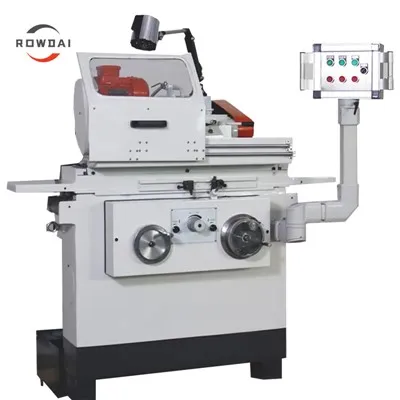
At the end of the day, improving vibration damping on a cylindrical grinding machine isn’t rocket science—it’s about paying attention to all the little details, not just the big parts. Whether you’re dealing with a new machine that’s underperforming or an old workhorse that’s seen better days, the steps are the same: fix your floor, check structural rigidity, balance your wheel, set the right parameters, and do regular maintenance.
CNC Slant Bed Lathe If you’re tired of rejecting parts from vibration chatter, or if your current setup just isn’t getting the precision you need, I’m here to help. As a cylindrical grinding machine supplier, I work with shops to tailor these solutions to their specific equipment and operations, whether it’s retrofitting an existing machine with upgraded linear guides or helping you set up a proper maintenance routine. Drop a note to my team, and we can walk through your challenges one by one. No sales pitch, no fluff—just real advice to get your grinding operation running smooth.
References
- Grinding Technology: Theory and Applications of Machining with Abrasives, S. Malkin and C. Guo, Industrial Press, 2008.
- Vibration Analysis for Machinery Maintenance, R. Colvin, Industrial Press, 2015.
- Cylindrical Grinding: Principles and Practice, J. Harkness, Elsevier, 2012.
- Machine Tool Structures: Vibration and Stability, G. Totis and M. Sortino, Springer, 2018.
Henan Rowdai Machinery Equipment Co., Ltd.
As one of the most professional cylindrical grinding machine manufacturers in China, we’re featured by quality products and good price. Please rest assured to buy high-grade cylindrical grinding machine for sale here from our factory. If you have any enquiry about cooperation, please feel free to email us.
Address: Building 9, E-Commerce Industrial Park, High-Tech Zone, Zhengzhou, Henan, China
E-mail: rowdai@rowdai.com
WebSite: https://www.rowdai.com/
