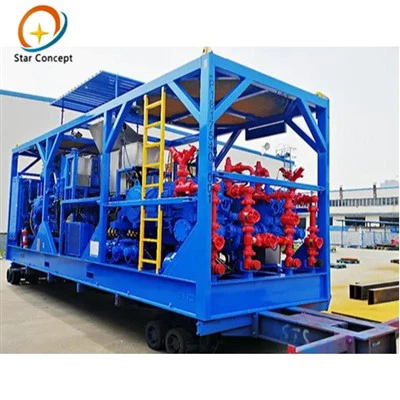
As a supplier of solid control systems, I’ve witnessed firsthand the transformative power these systems have on the wellbore cleaning process. In the oil and gas industry, wellbore cleaning is a critical operation that directly impacts drilling efficiency, well integrity, and overall project success. A solid control system plays a pivotal role in this process, and in this blog, I’ll delve into the various impacts it has. Solid Control System
1. Enhanced Drilling Fluid Quality
One of the primary impacts of a solid control system on wellbore cleaning is the improvement of drilling fluid quality. Drilling fluid, also known as mud, is essential for carrying cuttings from the wellbore to the surface. However, during the drilling process, the mud accumulates various solid particles such as rock cuttings, sand, and silt. If these solids are not properly removed, they can cause a range of problems.
A solid control system typically consists of several components, including shale shakers, hydrocyclones, and decanter centrifuges. The shale shaker is the first line of defense. It uses vibrating screens to separate larger cuttings from the drilling fluid. By removing these large particles early on, the subsequent components of the system can operate more effectively.
Hydrocyclones, such as desanders and desilters, further separate smaller solids based on their size and density. They use centrifugal force to spin the drilling fluid, forcing the heavier solids to the outer wall of the cyclone and allowing the cleaner fluid to exit from the center. This process significantly reduces the amount of fine solids in the mud, improving its rheological properties.
Decanter centrifuges are used to remove even finer solids and can also adjust the density of the drilling fluid. By removing these fine particles, the drilling fluid becomes more stable and less likely to cause issues such as stuck pipe, lost circulation, and poor wellbore stability.
2. Improved Wellbore Stability
Wellbore stability is crucial for successful drilling operations. When the wellbore is unstable, it can lead to problems such as hole collapse, formation damage, and increased drilling time. A solid control system helps maintain wellbore stability by ensuring that the drilling fluid has the proper properties.
The removal of solids from the drilling fluid helps to keep the mud weight within the desired range. If the mud weight is too high, it can cause excessive formation pressure, leading to fracture and lost circulation. On the other hand, if the mud weight is too low, the wellbore may collapse. By maintaining the proper mud weight, the solid control system helps to prevent these issues and ensures that the wellbore remains stable throughout the drilling process.
In addition, the clean drilling fluid provided by the solid control system is less likely to cause damage to the formation. If the drilling fluid contains a large amount of solids, these solids can penetrate the formation and cause permeability damage. This can reduce the productivity of the well and increase the cost of production. By removing these solids, the solid control system helps to protect the formation and ensure its long – term productivity.
3. Increased Drilling Efficiency
A solid control system can significantly increase drilling efficiency. When the drilling fluid is clean and has the proper properties, the drill bit can cut through the rock more easily. This reduces the torque and drag on the drill string, allowing for faster penetration rates.
The removal of solids also reduces wear and tear on the drill bit and other downhole tools. If the drilling fluid contains a large amount of abrasive solids, these solids can cause excessive wear on the drill bit, reducing its lifespan and increasing the frequency of bit changes. By removing these solids, the solid control system helps to extend the life of the drill bit and other downhole tools, reducing the overall cost of drilling.
Moreover, a well – functioning solid control system reduces the risk of downtime due to equipment failures. If the solids are not properly removed from the drilling fluid, they can clog the pipes, valves, and pumps, leading to equipment malfunctions. By keeping the drilling fluid clean, the solid control system helps to ensure the smooth operation of the drilling equipment and minimizes downtime.
4. Environmental Benefits
In today’s world, environmental protection is a top priority. A solid control system offers significant environmental benefits in the wellbore cleaning process. By removing solids from the drilling fluid, it reduces the amount of waste generated during drilling operations.
The separated solids can be treated and disposed of properly, minimizing their impact on the environment. In some cases, the solids can even be reused in other applications, such as in road construction or as a filler material. This not only reduces the environmental footprint of the drilling operation but also helps to conserve natural resources.
The clean drilling fluid can also be recycled and reused, reducing the need for fresh water and chemicals. This is particularly important in areas where water is scarce or where strict environmental regulations apply. By recycling the drilling fluid, the solid control system helps to reduce the consumption of valuable resources and minimize the discharge of pollutants into the environment.
5. Cost Savings
Implementing a solid control system can lead to significant cost savings in the long run. As mentioned earlier, it reduces the wear and tear on the drill bit and other downhole tools, reducing the need for frequent replacements. This alone can result in substantial cost savings over the course of a drilling project.
The increased drilling efficiency also translates into cost savings. Faster penetration rates mean that the well can be drilled in less time, reducing the overall drilling time and associated costs such as labor, equipment rental, and fuel consumption.
In addition, the environmental benefits of a solid control system can also lead to cost savings. By reducing waste generation and complying with environmental regulations, companies can avoid costly fines and legal issues.

As a supplier of solid control systems, we understand the importance of these systems in the wellbore cleaning process. Our solid control systems are designed to be efficient, reliable, and environmentally friendly. We offer a wide range of products to meet the specific needs of our customers, whether they are drilling onshore or offshore.
Drilling Equipment If you are looking to improve the efficiency and effectiveness of your wellbore cleaning process, we invite you to contact us. Our team of experts can provide you with detailed information about our products and help you choose the right solid control system for your project. We are committed to providing high – quality products and excellent customer service to ensure your satisfaction.
References
- Bourgoyne, A. T., Chenevert, M. E., Millheim, K. K., & Young, F. S. (1986). Applied Drilling Engineering. Society of Petroleum Engineers.
- Alekseev, A. N., & Markov, A. A. (2018). Drilling Fluids and Cement Slurries: Chemistry and Technology. CRC Press.
- Mian, I. H. (2012). Fundamentals of Drilling Engineering. PennWell.
Dongying Star Concept Petroleum Equipment Co., Ltd.
We are one of the most professional solid control system manufacturers and suppliers in China. With abundant experience, we warmly welcome you to buy durable solid control system made in China here from our factory. Good service and quality products are available.
Address: No. 9 Xisi Road, Dongying City, Shandong Province, China
E-mail: ellen@starconcept.cn
WebSite: https://www.star-cementing.com/
