As a supplier of large current plug sockets, I am often asked about the current – carrying capacity of our products. This technical specification is not only crucial for ensuring the safety and efficiency of electrical systems but also a key factor that customers consider when making a purchase decision. In this blog post, I will delve into the concept of current – carrying capacity, explain how it is determined for large current plug sockets, and discuss the factors that influence it. Large Current Plug Socket

Understanding Current – Carrying Capacity
The current – carrying capacity, also known as ampacity, of a large current plug socket refers to the maximum amount of electrical current that the socket can safely carry under normal operating conditions. Electrical current is the flow of electric charge, usually measured in amperes (A). When an electrical load, such as a high – power appliance or machinery, is connected to the plug socket, current flows through the socket’s conductors. If the current exceeds the socket’s current – carrying capacity, it can lead to overheating, which may cause damage to the socket, insulation failure, and even pose a fire hazard.
Determining the Current – Carrying Capacity
The current – carrying capacity of a large current plug socket is determined through a combination of theoretical calculations and practical testing.
Theoretical Calculations
The theoretical calculation of current – carrying capacity takes into account several factors, such as the cross – sectional area of the conductors, the type of conductor material, and the ambient temperature. The cross – sectional area of the conductor is a critical factor because a larger cross – sectional area allows for a greater flow of current. For example, copper is a commonly used conductor material in plug sockets due to its high electrical conductivity. The resistivity of copper is relatively low, which means that it can carry more current with less resistance and heat generation.
The following formula can be used to estimate the current – carrying capacity based on the cross – sectional area and resistivity:
[I=\frac{V}{R}]
where (I) is the current, (V) is the voltage, and (R) is the resistance. Resistance (R) can be calculated using the formula (R = \rho\frac{l}{A}), where (\rho) is the resistivity of the conductor material, (l) is the length of the conductor, and (A) is the cross – sectional area.
For instance, let’s assume we have a copper conductor with a resistivity (\rho = 1.72\times10^{-8}\Omega\cdot m), a length (l = 1m), and a cross – sectional area (A=16mm^{2}=16\times10^{-6}m^{2}). First, we calculate the resistance (R=\rho\frac{l}{A}=1.72\times 10^{-8}\times\frac{1}{16\times10^{-6}}\Omega = 0.001075\Omega). If the voltage (V = 230V), then the current (I=\frac{V}{R}=\frac{230}{0.001075}A = 214000A). However, in practice, other factors like heat dissipation and safety margins limit the actual current – carrying capacity.
Practical Testing
In addition to theoretical calculations, practical testing is essential to accurately determine the current – carrying capacity. Manufacturers conduct a series of tests, including long – term current – loading tests at different ambient temperatures. During these tests, the plug sockets are continuously supplied with a specific current, and the temperature rise is monitored. The maximum current that can be applied without causing the temperature of the socket to exceed the safe limit is considered the current – carrying capacity.
Factors Influencing Current – Carrying Capacity
Several factors can influence the current – carrying capacity of a large current plug socket:
Ambient Temperature
The ambient temperature around the plug socket is a significant factor. Higher ambient temperatures reduce the ability of the socket to dissipate heat, which in turn reduces its current – carrying capacity. For example, a plug socket that can carry a certain current at an ambient temperature of 25°C may have a lower current – carrying capacity at 40°C or 50°C. To account for this, manufacturers often provide derating curves that show how the current – carrying capacity decreases as the ambient temperature increases.
Conductor Material and Size
As mentioned earlier, the type of conductor material and its cross – sectional area play a crucial role. Copper and aluminum are the two most commonly used conductor materials in plug sockets. Copper has better electrical conductivity and higher current – carrying capacity than aluminum for the same cross – sectional area. Additionally, increasing the cross – sectional area of the conductor can significantly increase the current – carrying capacity.
Insulation Material
The insulation material used in the plug socket also affects the current – carrying capacity. High – quality insulation materials can withstand higher temperatures without degrading, allowing the socket to carry more current. Insulation materials are rated based on their maximum operating temperature, such as 90°C or 105°C. A socket with a higher – rated insulation material can generally carry more current.
Installation Conditions
Proper installation is vital for achieving the rated current – carrying capacity. If the plug socket is installed in a crowded or poorly ventilated area, heat dissipation will be impaired, reducing the current – carrying capacity. On the other hand, proper spacing and ventilation during installation can help maintain the designed current – carrying capacity.
Our Large Current Plug Sockets
At our company, we understand the importance of current – carrying capacity and take every measure to ensure the quality and performance of our large current plug sockets. Our plug sockets are designed and manufactured using high – quality materials, including high – conductivity copper conductors and high – temperature – resistant insulation materials.
We conduct rigorous testing on all our products to ensure they meet or exceed the relevant international standards. Our testing facilities are equipped with state – of – the – art equipment, allowing us to accurately measure the current – carrying capacity under different conditions. Whether it is for industrial applications, high – power electrical systems, or large – scale commercial projects, our large current plug sockets are designed to provide reliable and safe power connections.
Why Choose Our Products
- High – Quality Materials: We use only the best materials in our manufacturing process, ensuring long – term durability and high current – carrying capacity.
- Strict Quality Control: Our products undergo multiple quality control checks to ensure they meet the highest standards of safety and performance.
- Customization Options: We can customize our large current plug sockets according to your specific requirements, including different current – carrying capacities, plug and socket configurations, and environmental protection levels.
- Technical Support: Our team of experienced engineers is available to provide you with technical support and advice on the selection and installation of our products.
Conclusion
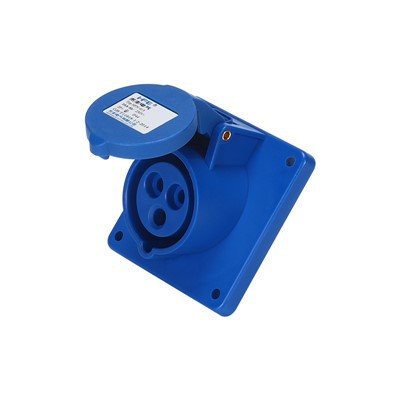
The current – carrying capacity of a large current plug socket is a critical parameter that determines its performance and safety. Understanding the factors that influence it, such as ambient temperature, conductor material, and installation conditions, is essential for users and designers. As a professional supplier of large current plug sockets, we are committed to providing high – quality products with reliable current – carrying capacity.
Socket Box If you are in need of large current plug sockets for your project, or if you have any questions about our products, please feel free to contact us for a detailed discussion. We are looking forward to working with you to provide the best solutions for your electrical needs.
References
- National Electrical Code (NEC)
- International Electrotechnical Commission (IEC) standards
- Textbooks on electrical engineering, such as "Electric Circuits" by James W. Nilsson and Susan A. Riedel.
Zhejiang Hefeng Electric Co., Ltd.
Zhejiang Hefeng Electric Co., Ltd. is one of the most professional large current plug socket manufacturers and suppliers in China, featured by quality products and low price. Please rest assured to buy durable large current plug socket made in China here from our factory. Also, OEM service is available.
Address: Wenzhou Daqiao Industrail Park, Beibaixiang Town, Yueqing City, Zhejiang Province, China
E-mail: hefengplug@chinahfe.com
WebSite: https://www.hfcee.com/
